
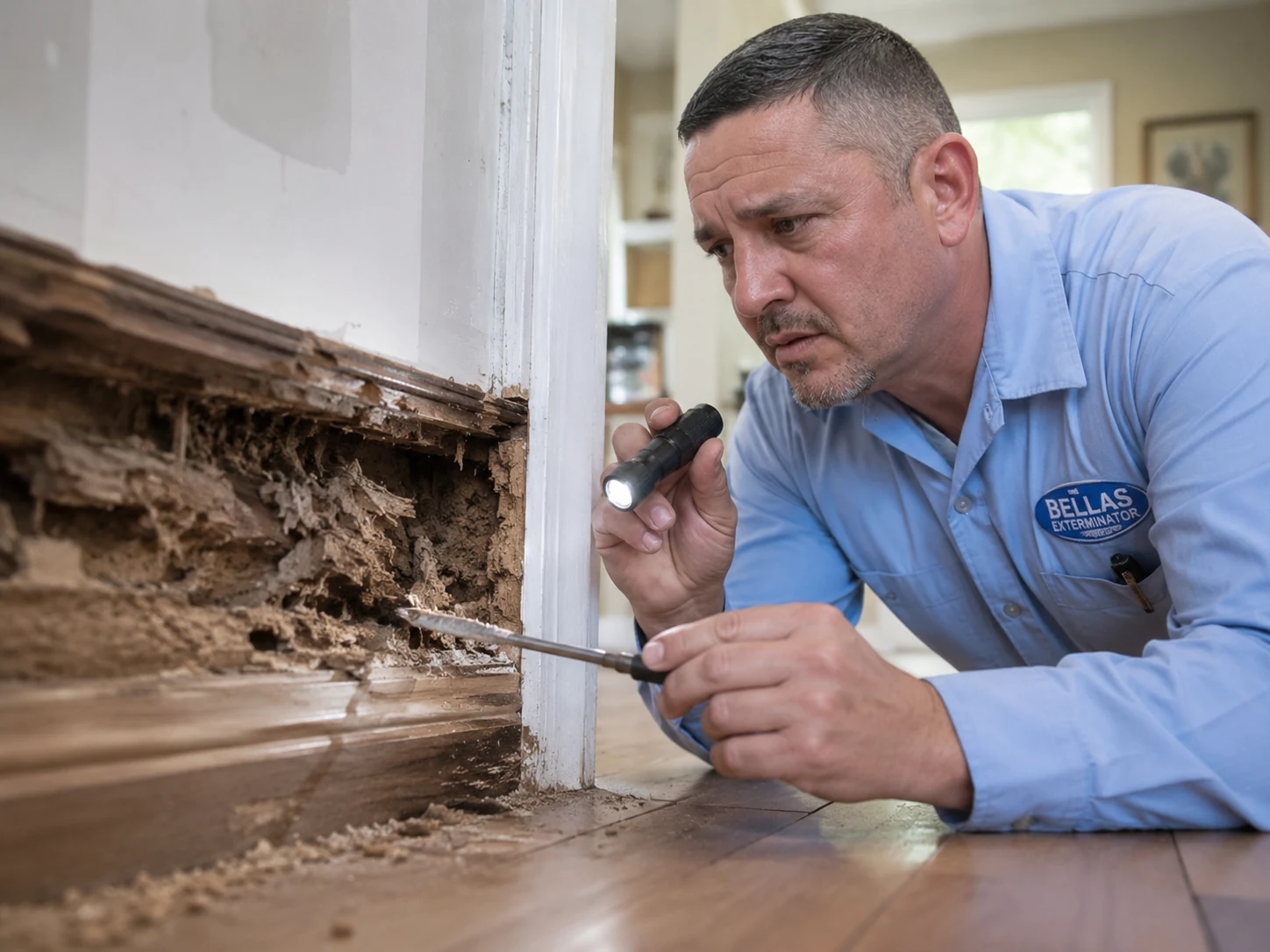
Termites rarely announce themselves. They work in silence and stay out of sight, which is what makes them so costly. The key to stopping them is knowing the early warning signs of termites so you can act before the damage grows.
The earliest clues are small and easy to miss. But once you know what to look for, they stand out. Our Glendora team walks you through each warning sign, what it means, and what to do the moment you notice one.
The early warning signs of termites include mud tubes running up your foundation, discarded wings near windows and doors after a swarm, and wood that sounds hollow when tapped. You may also see frass — small pellets that look like sawdust or coffee grounds — beneath wooden surfaces. Other clues include paint that looks bubbled or cracked, and doors or windows that suddenly stick. None of these signs are loud, which is why so many infestations go unnoticed for years. The sooner you spot them, the less damage termites can do. If you see two or more of these signs, it is time for a professional inspection. Seeing the signs? Book a free termite inspection in Glendora today.
Mud tubes are one of the clearest signs of subterranean termites. These are thin tunnels of dried mud, about as wide as a pencil, that run up your foundation, walls, or crawl space. Termites build them to travel safely from the soil to your wood.
If you find a tube, break a small piece open. Live termites inside mean an active infestation. An empty tube still means termites have been there and may return.
Once or twice a year, young termites called swarmers fly out to start new colonies. After the flight, they shed their wings. Finding a pile of small, equal-sized, see-through wings on a window sill or floor is a major warning sign.
Seeing the swarmers themselves — dark, winged insects near a light or window — is another clue. A swarm near or inside your home often means a colony is already established nearby.
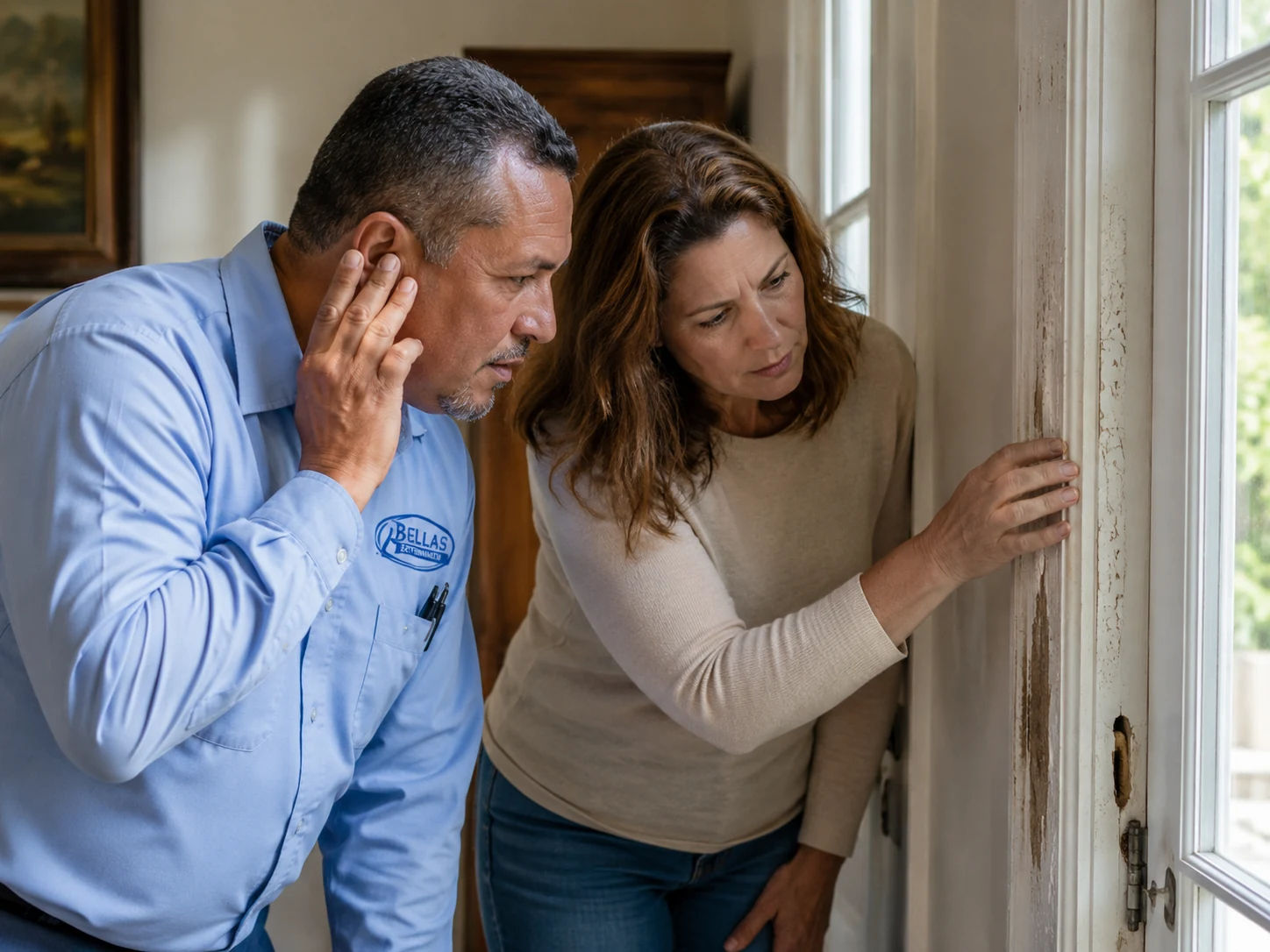
Termites eat wood from the inside, leaving a thin shell on the surface. Tap a beam, baseboard, or door frame. If it sounds hollow or papery, termites may be feeding inside. If you press it and the wood feels soft or crumbles, the damage is already underway.
This is one of the most reliable signs you can check yourself during a quick walk-through.
Drywood termites push their droppings, called frass, out of the wood through tiny holes. The result is small piles of sawdust-like or pellet-shaped droppings on floors, sills, or furniture below the infested wood.
These pellets are often six-sided and gritty, a bit like coarse coffee grounds. A small pile that keeps coming back is a strong sign of active drywood termites.
Some signs are easy to blame on age or weather. Doors and windows that suddenly stick can be caused by termites swelling and warping the wood. Paint that bubbles, cracks, or looks uneven may hide damage or moisture underneath.
On their own these are minor. Together with mud tubes, wings, or frass, they point clearly to termites.
Knowing where to look makes the warning signs easier to catch. Subterranean termites enter low, so check the foundation, crawl space, garage slab, and any spot where wood meets soil. Mud tubes and damaged framing often show up here first.
Drywood termites prefer dry, sun-warmed wood up high. Look in the attic, along the eaves, in roof beams, and inside wooden window and door frames. Furniture, hardwood floors, and stored items in the garage can also hide them. Homes near the San Gabriel foothills, like many in Glendora, face pressure from both types, so it pays to check high and low.
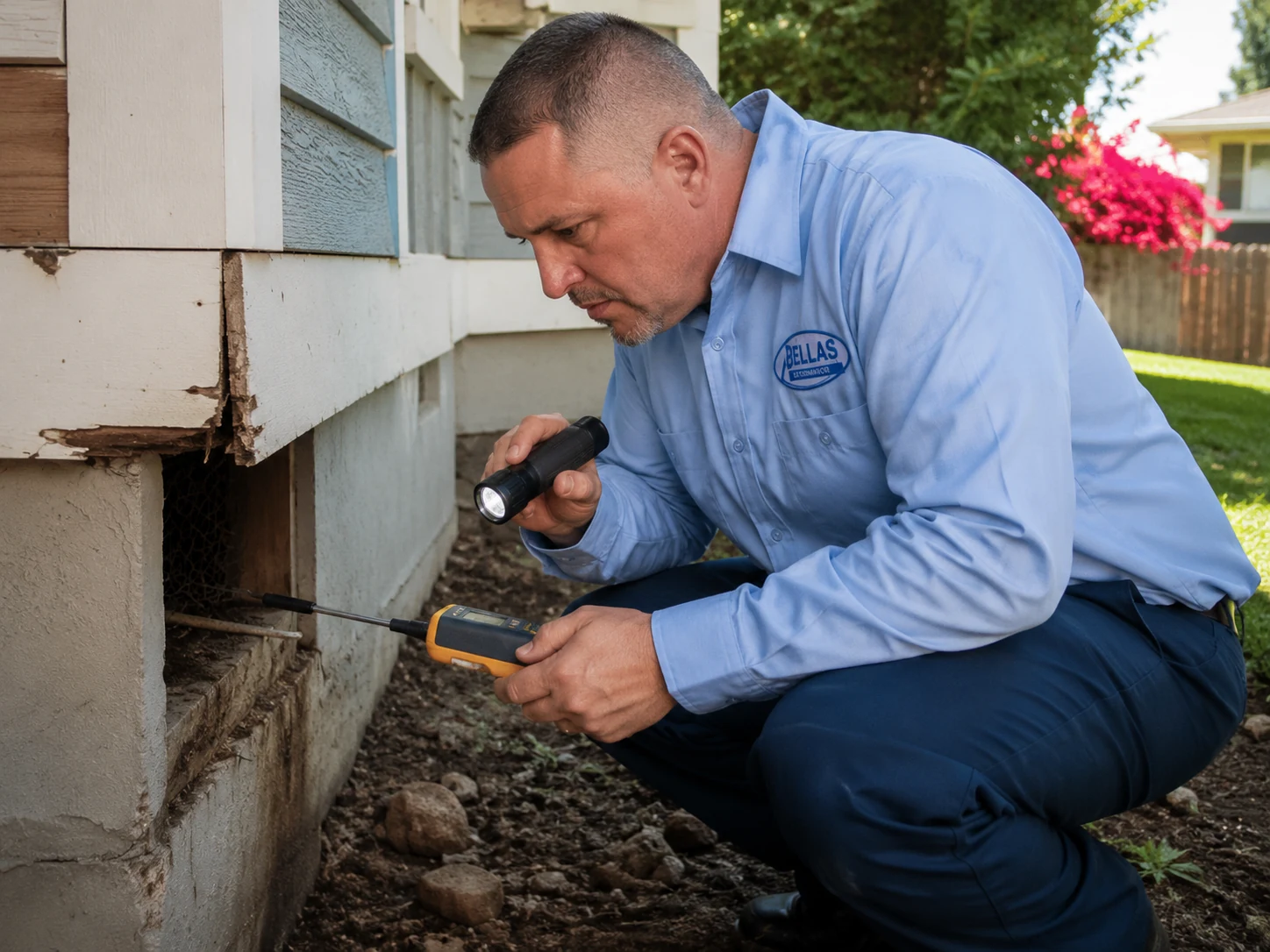
Early warning signs are subtle: a few discarded wings, a thin mud tube, a small pile of frass. At this stage the colony may be young and the damage minor. This is the best time to act, because treatment is simpler and repairs are small or none.
Advanced damage is louder. You may see sagging floors, hollow beams that flex when pressed, visible tunnels in exposed wood, or doors that no longer close. By then the colony has been working for a long time. Catching the early signs is what keeps a problem from ever reaching this point.
A self-check finds clues, but a licensed inspector confirms them. Pros use bright lights, probes, and moisture meters to find activity behind walls and under floors that you simply cannot see. They also know the difference between old, inactive damage and a live, feeding colony.
When we inspect a Glendora home, we work through the attic, the sub-area, the full foundation line, and every wood-to-soil contact point. Then we explain what we found and what it means in plain language. Our termite inspections are free, so confirming a worry costs you nothing.
One of the most common questions homeowners ask is how quickly termites can hurt a home. The honest answer is that termites work slowly, but they never stop. A single colony can include tens of thousands of termites, all feeding day and night, every month of the year. You will not wake up to a collapsed floor overnight. Instead, the damage builds quietly over months and years, which is exactly why the early warning signs matter so much. Catching them early turns a small, cheap problem into a non-event instead of a major repair.
The speed also depends on the type of termite and the conditions in your home. Subterranean termites, fed by moisture, can grow large colonies that do real damage faster than many people expect. Drywood termites tend to work more slowly but can hide in attics and furniture for years. In Glendora's mild, year-round climate, neither type takes a true break. That steady, hidden progress is the reason a yearly inspection is such a smart habit — it shrinks the window in which termites can work unnoticed.
Spotting the warning signs early is genuinely good news, because it means you can act while the problem is still small. Once you confirm termites with an inspection, a professional can treat the colony directly and stop the feeding. For subterranean termites, that may mean soil barriers and bait systems; for drywood termites, it may mean spot treatment, heat, or fumigation. The key is that treatment targets the colony, not just the termites you happened to see, so the problem ends instead of simply pausing for a few weeks.
You can also make your home less welcoming to the next colony. Fixing leaks, keeping water away from the foundation, storing firewood away from the house, and sealing cracks all help. None of these habits replace treatment once termites are active, but together with a professional plan they keep your home protected for the long run. The homeowners who act quickly on the first signs almost always spend far less than those who wait until the damage is impossible to ignore.
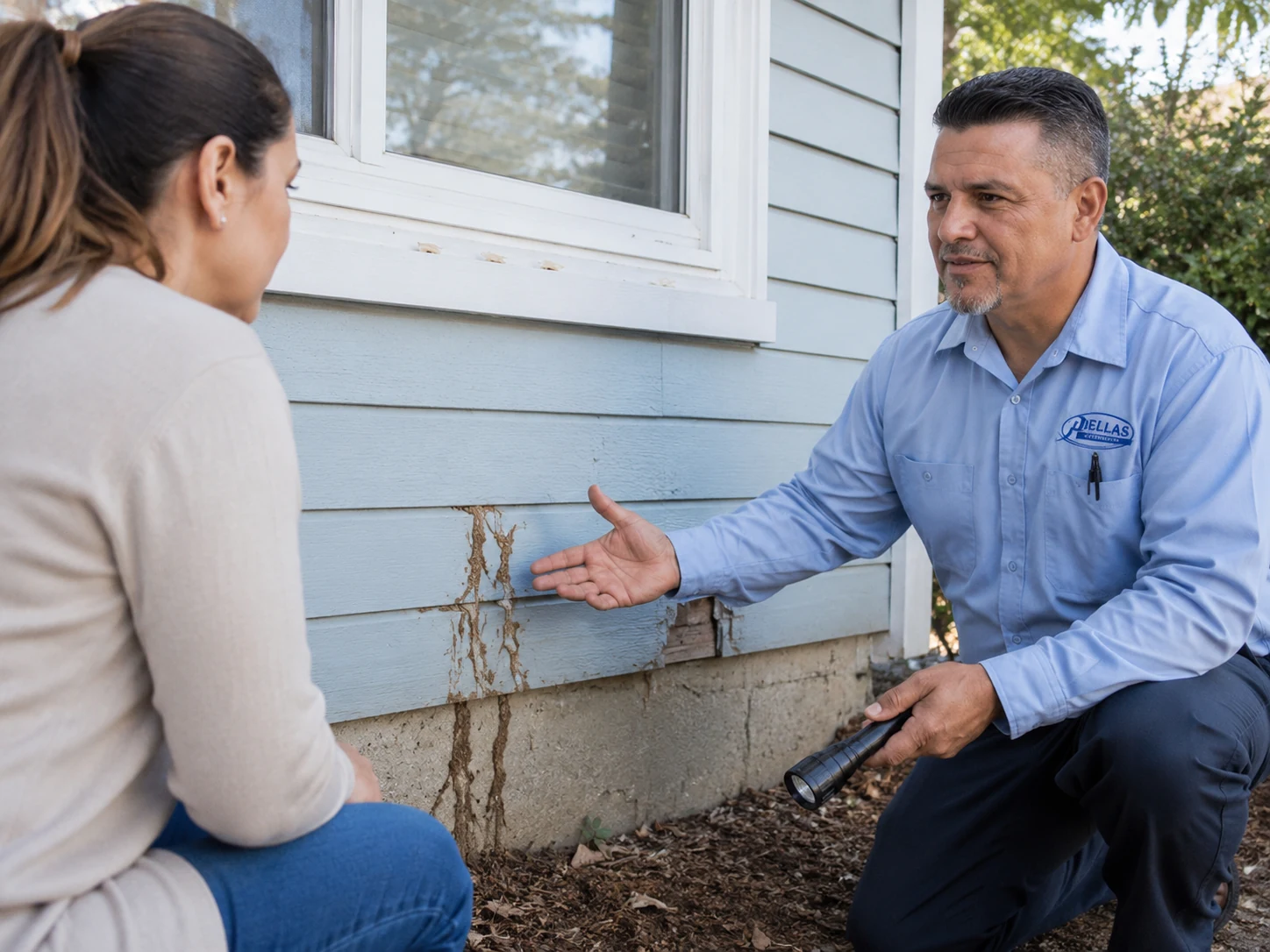
If you notice any of these warning signs, do not wait and do not disturb the area more than needed. The next step is a professional inspection to confirm whether the termites are active and how far they have spread.
In Glendora's mild climate, termites stay busy almost year-round, so early action really pays off. See how we treat infestations on our termite control service page, or check the areas we serve.
It helps to remember that warning signs are an opportunity, not just bad news. Every clue you catch is a chance to stop termites before they do their worst. The homeowners who pay attention to mud tubes, wings, and frass — and act on them — are the ones who avoid the sagging floors and costly repairs that come from years of hidden feeding. A short walk-through a few times a year, paired with a professional inspection when something looks off, is all it takes to stay a step ahead and keep your home protected.
Spotted a warning sign?
📞 Call (626) 625-2869
👉 Schedule your free termite inspection — as the #1 pest & termite control service in Glendora, our owner-operated team will confirm the problem and protect your home before the damage grows.
Authority source: California Structural Pest Control Board – Termites: Questions & Answers