
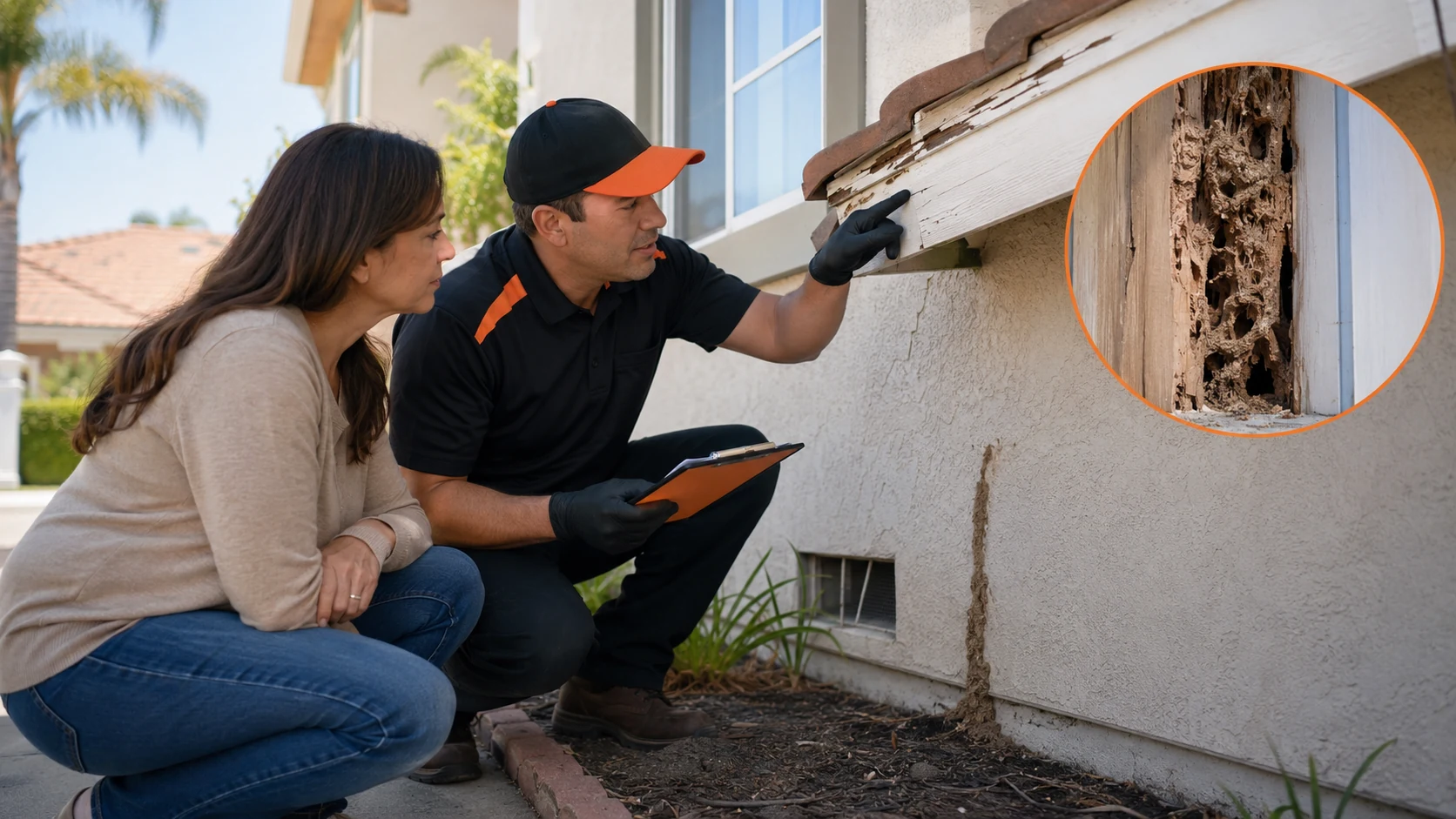
Termites are quiet pests. They can live inside your walls for years before you ever see them. By the time the damage shows, the colony may already be large. That is why learning how to check your home for termites is so important. A few simple checks each year can help you catch a problem early, while it is still small and cheap to fix.
In Glendora, homes sit close to the San Gabriel foothills, where both drywood and subterranean termites are common. The warm, dry weather lets them stay active most of the year. The good news? You do not need special tools to do a basic check. In this guide, our local team walks you through what to look for, where to look, and when it is time to call a pro.
To check your home for termites, do a slow walk around the inside and outside. Tap wooden beams, baseboards, and door frames — if the wood sounds hollow or feels soft, termites may be inside. Look along your foundation for mud tubes, which are thin tunnels of dried mud about as wide as a pencil. Check window sills and floors for tiny discarded wings. Look for small piles that resemble sawdust or coffee grounds near wood, which can be droppings. Do this check two or three times a year, plus after any swarm. A self-check is a great first step, but only a licensed inspector can confirm an active infestation. Worried about what you found? Book a free termite inspection with our Glendora team.
Termites eat wood from the inside out. They start where you cannot see, like inside walls, floors, and support beams. This means damage builds up slowly and quietly. A small colony you catch this year is far cheaper to treat than a hidden one you find in three years.
Here is something many people do not know: most home insurance does not cover termite damage. The repair bill comes out of your own pocket. Regular checks are the best way to protect both your home and your wallet.
In our 20+ years serving LA County, we have seen a clear pattern: the homes that get checked often are the ones that avoid the big repair bills. A 15-minute walk-through can save thousands.
Glendora homes mainly face two kinds of termites. Drywood termites live inside dry wood, like attic beams, eaves, window frames, and furniture. Subterranean termites live in the soil and build mud tubes to travel up to your wood. Knowing the difference helps you know where to look.
Worker termites are pale and cream-colored, a bit like grains of rice. The ones you are most likely to see are swarmers — darker, winged termites that fly out to start new colonies. Common hiding spots include:
You can do a basic termite check on your own in about 15 minutes. Move slowly and use a flashlight. Here is the order we recommend:
Write down anything odd and take photos. This gives an inspector a head start if you decide to call one.
Some clues point straight to termites. Use this quick table when you do your check:
| What you see | What it may mean |
|---|---|
| Mud tubes on the foundation | Subterranean termites |
| Sawdust-like pellets (frass) | Drywood termites |
| Discarded wings near windows | A recent termite swarm |
| Hollow or soft wood | Active feeding inside |
| Bubbling or cracked paint | Moisture or termites under the surface |
| Doors or windows that stick | Wood swelling from damage |
One sign alone is not proof, but two or more together is a strong reason to get a professional look.
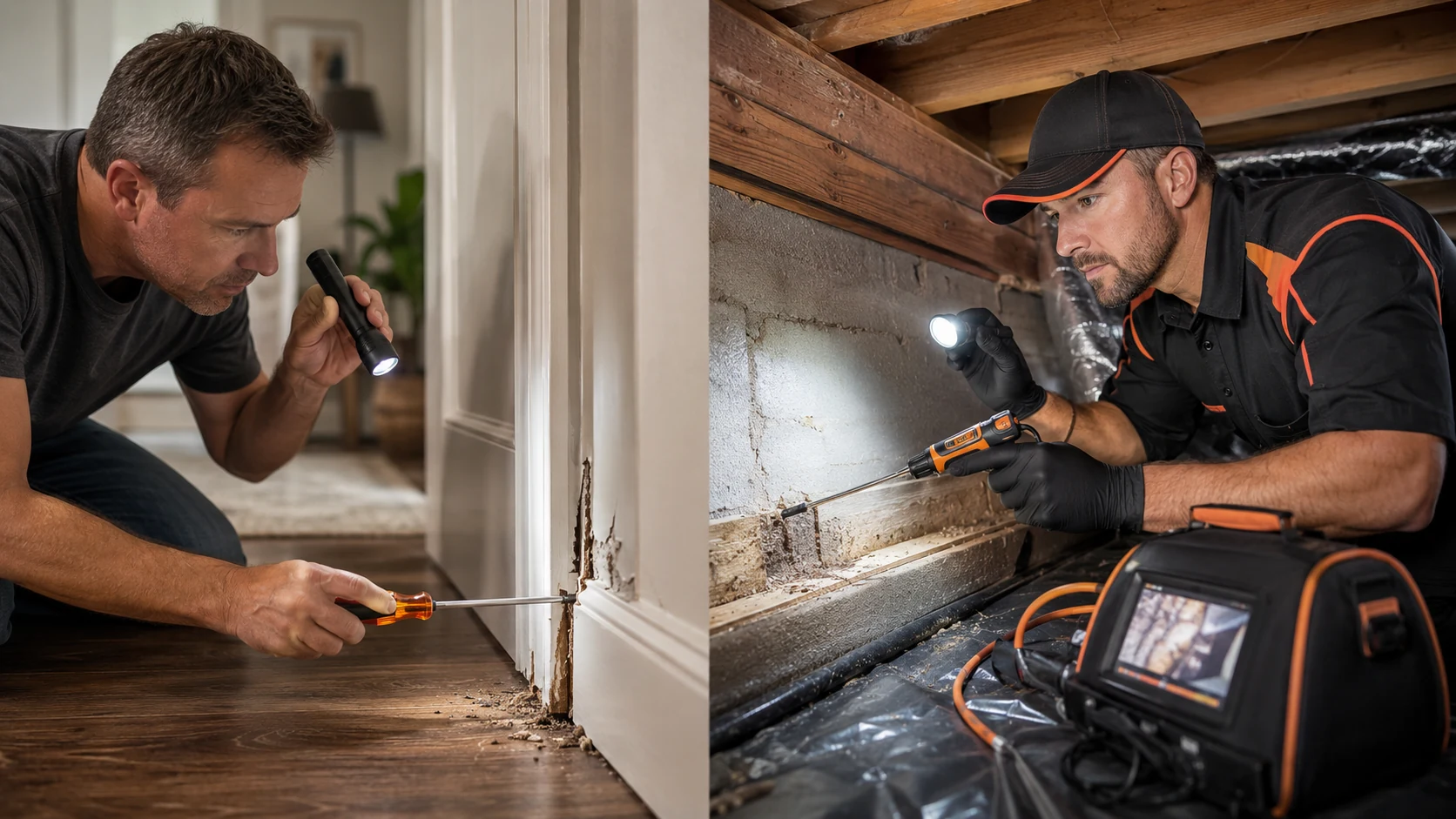
A self-check finds clues. A trained inspector confirms them and finds the hidden colonies you cannot reach. Pros use moisture meters, probes, and years of field experience to read the signs.
In California, a professional inspection is usually needed to confirm an active infestation and to put it in writing. When we inspect a Glendora home, we check the attic, the sub-area, the full foundation line, and every spot where wood touches soil. Then we explain exactly what we found in plain language.
The best part: our termite inspections are always free, so there is no cost to get peace of mind.
Because Glendora's mild climate keeps termites active most of the year, a quick glance every few years is not enough. We suggest a full self-check two or three times a year. A good rhythm is once in spring, before subterranean termites swarm, once in late summer, before drywood termites swarm, and once after heavy rain. Rain pushes termites to move and fly, so it is a smart time to look closely.
It also helps to check at key moments: before you buy or sell a home, after a remodel that adds new wood, or any time you spot a cloud of winged insects. A few minutes, a few times a year, is cheap insurance against a hidden colony that could cost thousands later.
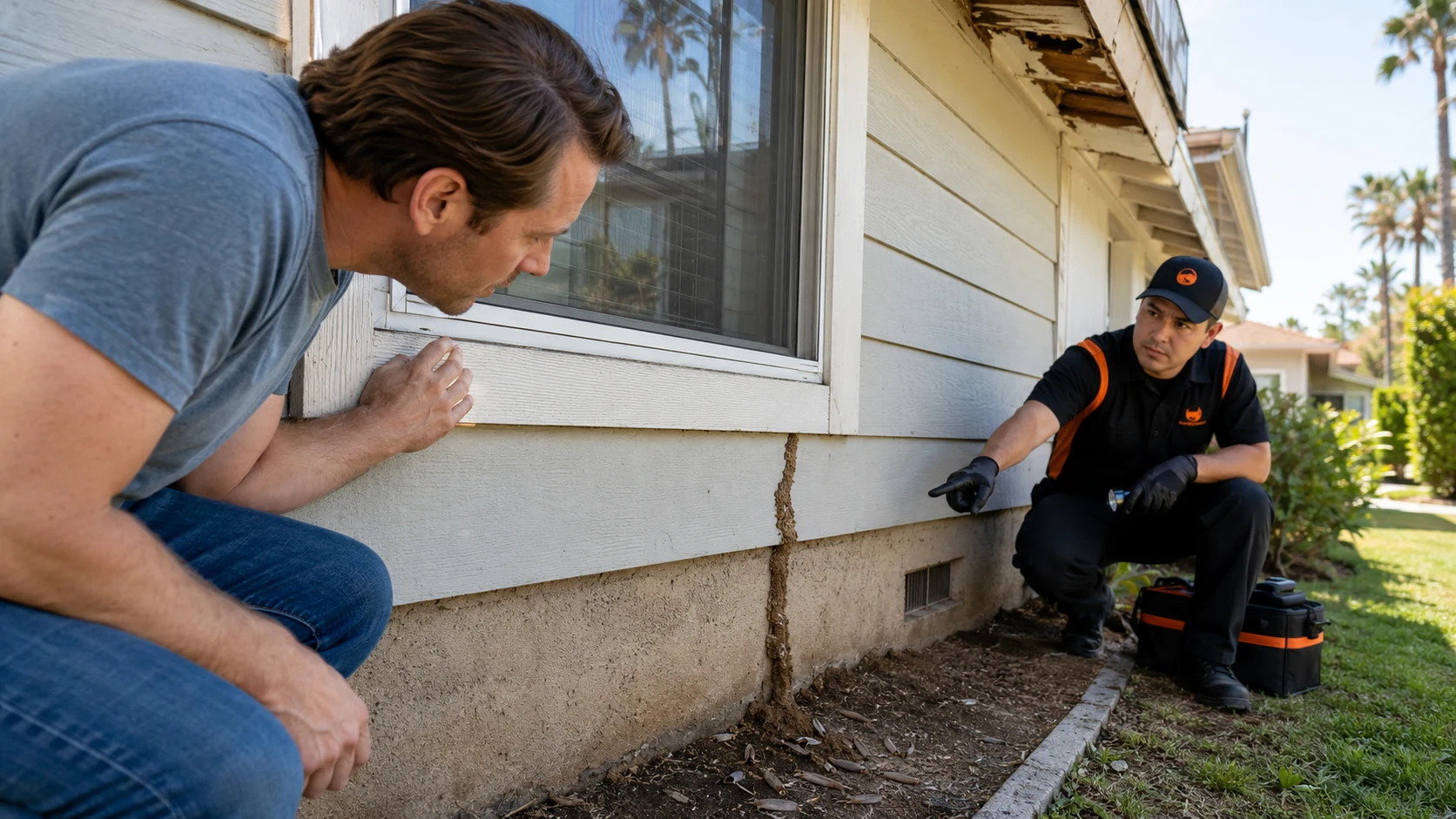
The biggest mistake is only looking at eye level. Termites usually start low, near the foundation, or high, up in the attic — the two spots most people skip. Bring a flashlight and check both ends of your home, not just the middle.
Another common error is cleaning up the evidence too soon. If you wipe away mud tubes or sweep up frass before taking a photo, you erase the clearest clues an inspector has. Leave them in place and snap a picture instead. The same goes for a swarmer you find indoors — save one in a bag if you can, since it helps with identification.
Finally, do not assume a single ant-like bug is harmless. One swarmer inside can mean a colony is close by. When in doubt, treat any sign as worth a second look rather than brushing it off.
A self-check costs only a little of your time. And if you want a professional opinion, our termite inspection is always free, so there is no risk in being sure. Many homeowners feel real relief just from knowing, one way or the other, what is going on inside their walls.
If we do find termites, we explain the type, how far they have spread, and your options in plain language — with no pressure and no scare tactics. You stay in control and decide what happens next.
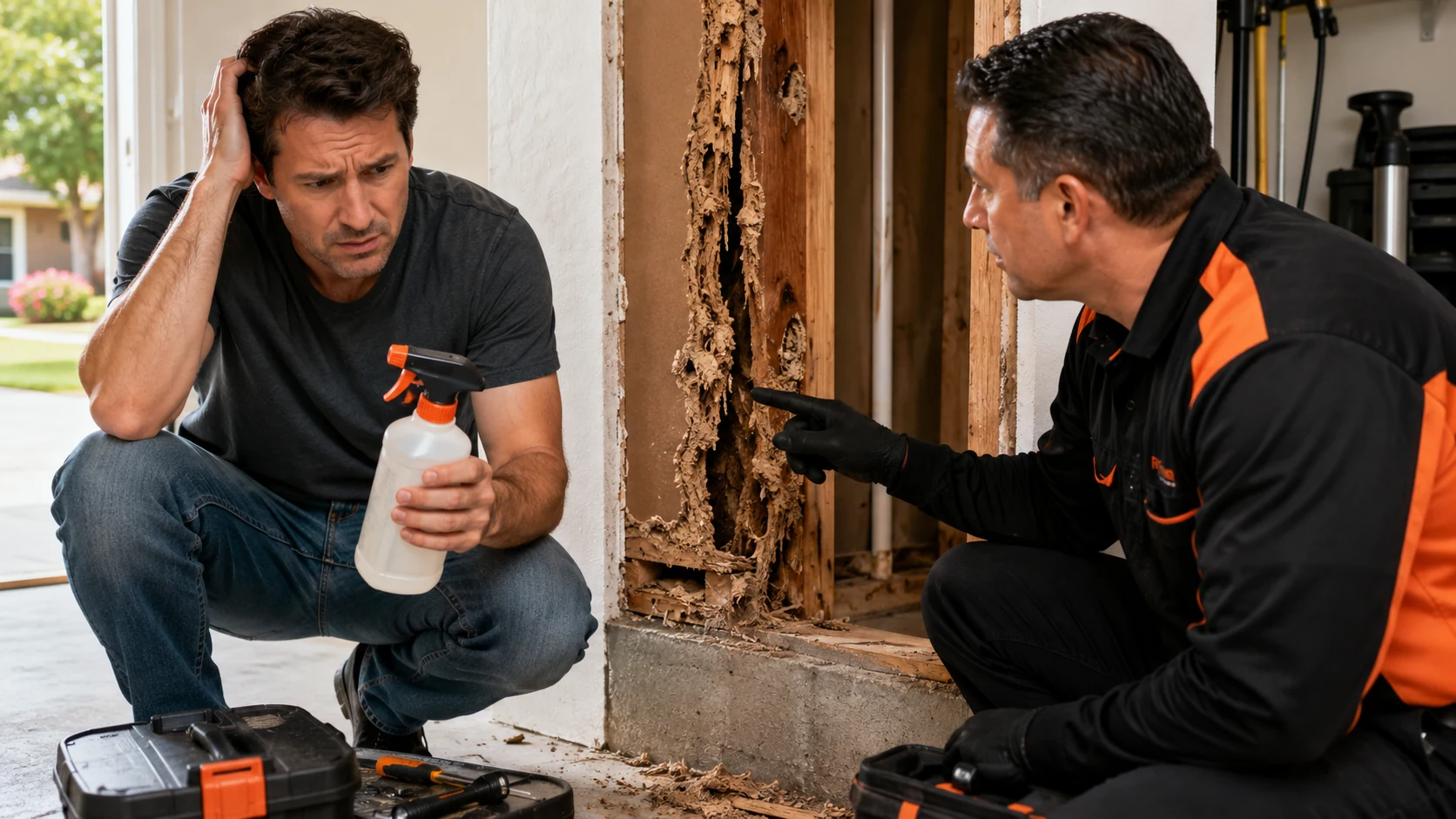
It is tempting to grab a spray and handle termites yourself, especially when you only see a small spot of damage. The honest answer, though, is that do-it-yourself treatment almost never works for termites. Store-bought products kill only the few termites they directly touch, and they never reach the heart of the colony. While you spray the surface, the queen keeps the nest growing deep inside the wood or soil. Within weeks the colony has replaced its losses, and the damage quietly continues. What feels like a quick win often just hides the problem and lets it spread further.
There is also a safety side to consider. Some termite products and tools are regulated in California for good reason, and a licensed technician knows how to use them safely around children and pets. That does not mean your self-checks are wasted, though — far from it. The clues you gather during a walk-through give an inspector a real head start and help catch the problem early. So the best split is simple: you watch for the signs, and a professional confirms and treats the colony the right way.
Call a pro if you spot any of the signs above, if you see a swarm, or if you are buying or selling a home. A yearly check is also smart, since Glendora's mild climate keeps termites active almost all year.
You can also explore our termite control service to see how treatment works, or browse our pest library to learn more about local pests.
Not sure if those signs mean termites? Don't wait.
📞 Call (626) 625-2869
👉 Schedule your free termite inspection — as the #1 pest & termite control service in Glendora, our local, owner-operated team is ready to help across LA County.
Authority source: UC IPM – Subterranean and Other Termites