
What is the most effective way to control rodents at home?
The most effective way to control rodents at home is a three-part plan: exclusion, sanitation, and trapping. First, seal every gap rodents could use to get inside, since mice fit through holes the size of a dime. Second, remove their food and water by storing food in sealed containers, fixing leaks, and clearing clutter. Third, set snap traps along walls where rodents travel.
For a complete, lasting fix, a licensed pest professional inspects the whole property and monitors it over time. Done together, these steps stop current rodents and help keep new ones out.
Step 1
Start by sealing entry points
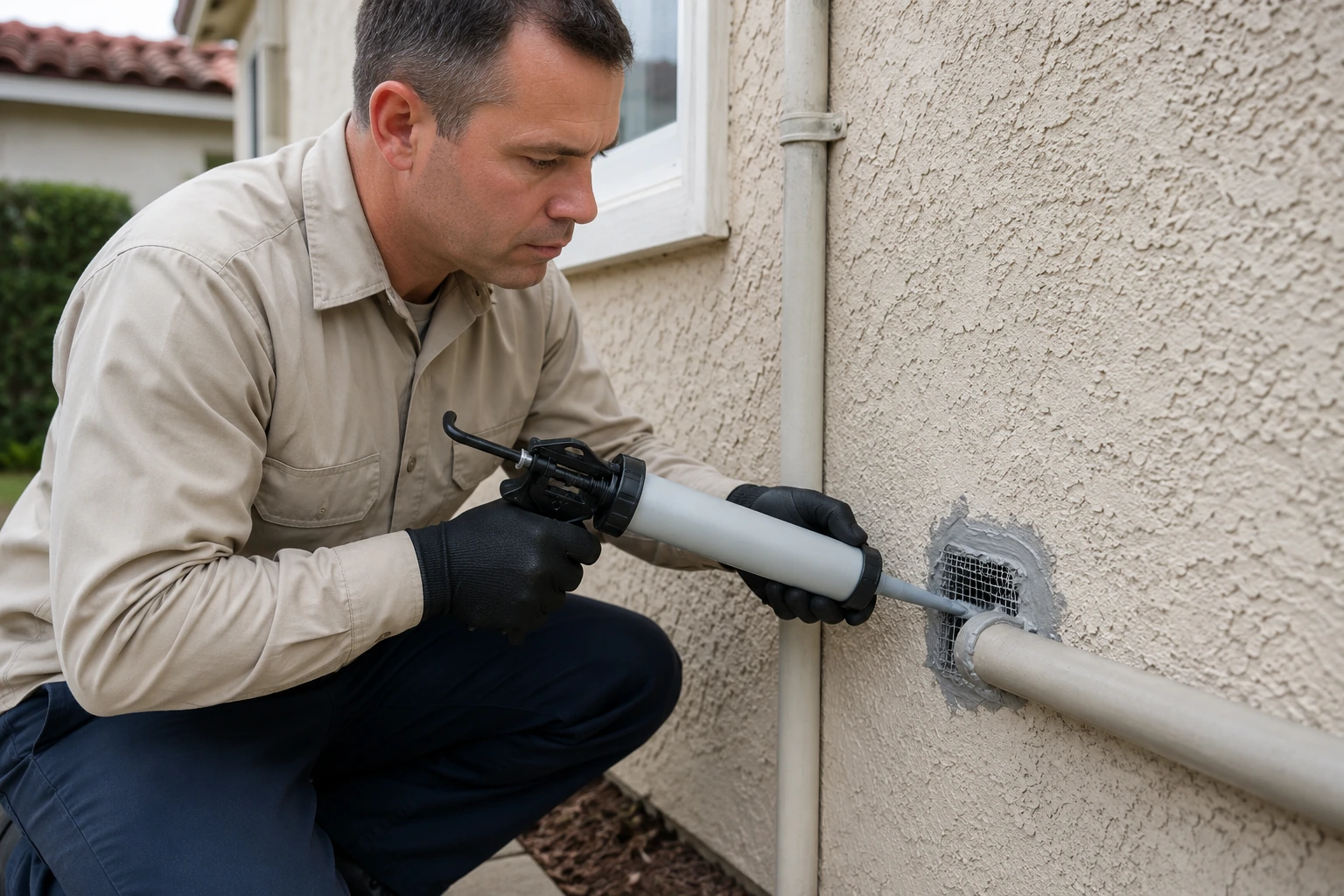
Exclusion is the heart of rodent control. If rodents cannot get in, the rest of the job becomes easier. Walk around your home and look closely for gaps around pipes, vents, cables, and the garage door. Check where the roof meets the walls, since roof rats love high entry points near the eaves.
Mice can squeeze through a hole the size of a dime, and rats through one the size of a quarter, so even small openings matter. Seal small gaps with steel wool packed into sealant, and cover larger holes with hardware cloth or metal flashing. Avoid plastic or foam on its own, because rodents chew right through soft materials.
Pay extra attention to door sweeps, weep vents, and the spots where utility lines enter the house. These are the doors rodents use most. In our years serving Glendora homes, careful sealing solves more rodent problems than any spray or bait ever will.
Pro tip: Inspect at dusk when gaps are easier to spot against outdoor light, and use a flashlight in the attic to find pinholes of daylight.
Step 2
Remove food, water, and shelter
Rodents stay where life is easy. Take away their food and water, and your home becomes far less inviting. Keep pantry items in sealed glass or metal containers, not cardboard boxes that rodents chew open. Wipe up crumbs, empty the trash often, and store pet food in closed bins. Never leave pet bowls out overnight.
Outside, the yard matters just as much as the kitchen. Trim back tree branches that touch the roof, because roof rats use them as bridges into the attic. Move woodpiles away from the house and raise them off the ground. Clear thick ground cover, ivy, and dense shrubs where rodents like to hide.
Birdseed, chicken feed, and open compost are some of the strongest rodent attractants in Southern California, so manage them carefully. Store seed and feed in metal cans with locking lids, and keep compost in a sealed bin rather than an open pile. Even a barbecue grease tray or a recycling bin with sticky cans can feed a rodent through the night.
- ✓Food
Seal pantry items, pet food, birdseed, chicken feed, and trash.
- ✓Water
Fix dripping faucets, leaky pipes, and outdoor water sources.
- ✓Shelter
Trim branches, reduce clutter, clear ivy, and move woodpiles away from the home.
Step 3
Set the right traps in the right places
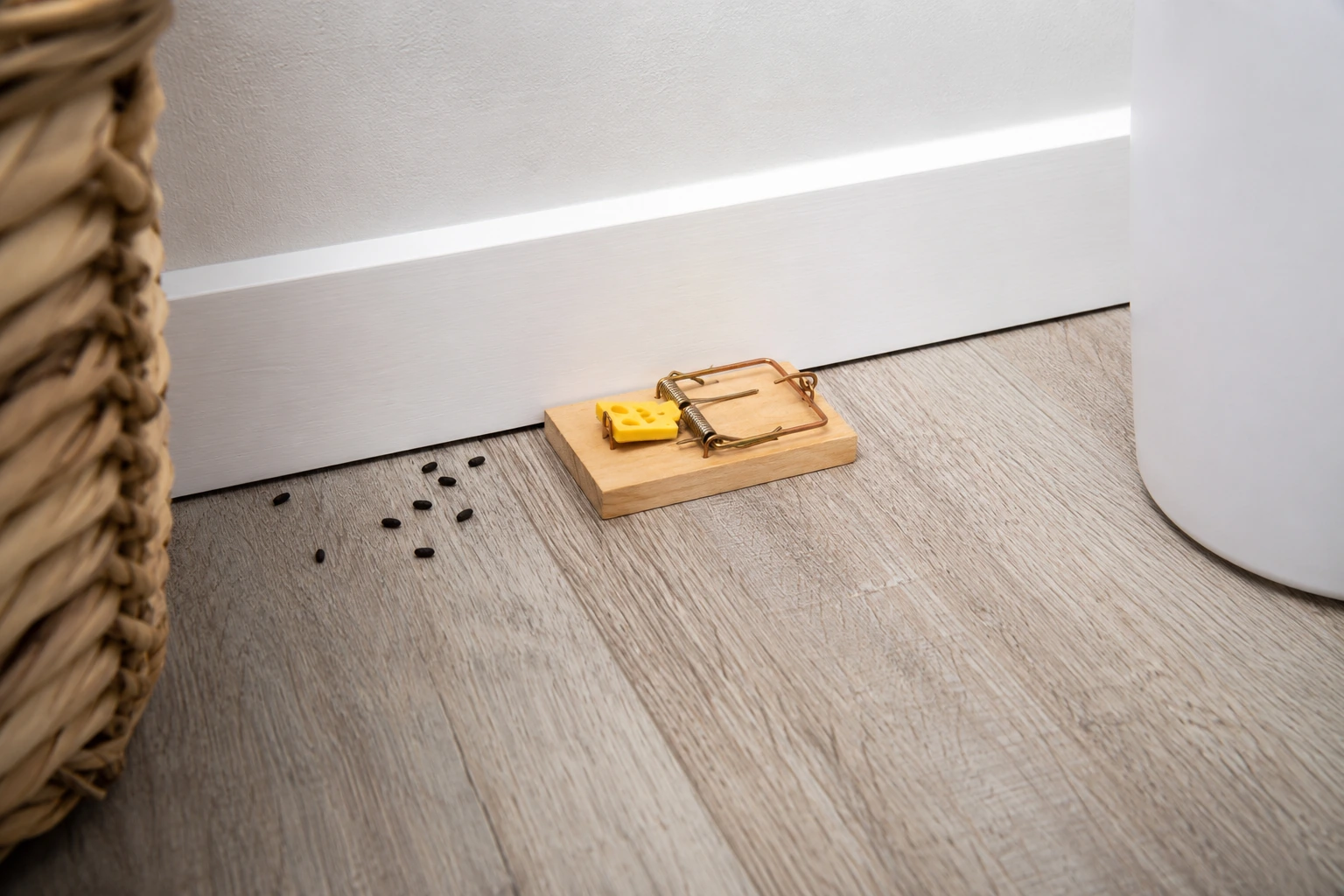
Trapping removes the rodents already living inside. For most homes, simple snap traps are the best choice. They work fast, cost little, and let you see your progress clearly. Place traps along walls, behind appliances, and in dark corners where you spot droppings.
Rodents travel close to walls and rarely cross open floors, so set traps with the trigger end facing the baseboard for the best results. Use plenty of traps—far more than you think you need. A common mistake is setting just one or two and waiting. Bait with a small dab of peanut butter, and check the traps daily.
Safety matters when you trap, especially around children and pets. Place traps in spots people and animals cannot reach, such as behind heavy appliances or inside closed cabinets, and wear gloves when handling them. Dispose of captured rodents in a sealed bag, and clean the area with disinfectant rather than a broom, which can stir up germs into the air.
Why the Full Plan Matters
Why one method alone falls short
It is tempting to hope a single product will fix everything. In practice, no one step works on its own. Poison without sealing simply invites new rodents to replace the old ones. Sealing without trapping can trap rodents inside, where they die in walls and cause odor. Cleaning up without exclusion only slows the problem down.
Think of it as breaking the cycle. Exclusion blocks the highway, sanitation removes the reward, and trapping clears the current crowd. When all three happen at once, the rodent population has nowhere to go and nothing to gain. This is the same logic professionals follow on every job, and it is why a planned approach beats a quick fix every time.
Many homeowners learn this the hard way. They spend money on poison, see the activity dip, and then watch it return a month later because the entry points were never closed. Each shortcut wastes time and lets the problem drag on.
Know When to Get Help
When to call a professional
Some rodent problems are too large or too hidden to solve alone. If you keep seeing droppings, hear scratching in the walls, or notice a musky smell, the population may already be well established. Rodents in attics and crawl spaces are especially hard to reach without the right tools, lighting, and training.
A licensed technician inspects the whole property, finds hidden entry points, and sets up a sealing and monitoring plan that lasts. As a family-owned, owner-operated company with more than 20 years in the San Gabriel Valley, Bellas Exterminator knows exactly where local rodents hide and how to keep them out.
Our approach always starts with a careful inspection of the whole property, inside and out. We map where rodents are getting in, where they nest, and what is drawing them, then we seal, trap, and monitor until the home is quiet. The result is a home that stays protected, not just cleared for a week or two.
Our Services
A Solution For Any Kind Of Pest Needs
Residential Pest Control
Tailored protection for your home, family, pets, and day-to-day comfort.
Rodent Control
Inspection, exclusion guidance, trap placement, and long-term prevention.
Ongoing Prevention
Monitoring and smart maintenance so pest issues do not keep coming back.
Enjoy A Pest Free Environment!
Need help getting rodents out for good?
If rodents have moved into your home, contact Bellas Exterminator for a free inspection. Our local team can find the hidden entry points, remove the rodents already inside, and help keep your home protected long term.