
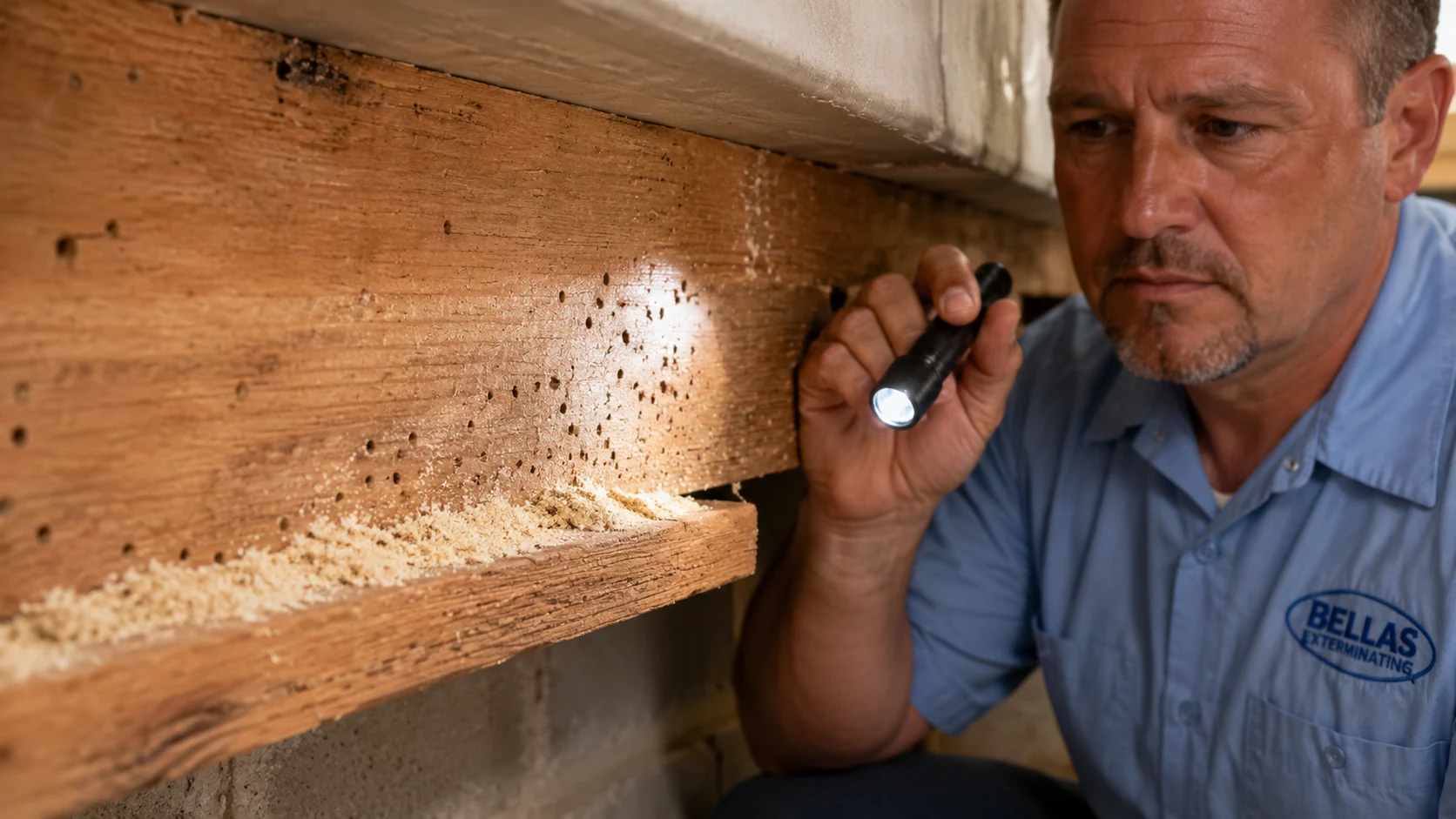
You spot winged bugs near a window, or tiny holes in a beam, and your heart sinks — termites. But hold on. Several other pests look a lot like termites, and telling them apart changes everything. Knowing what gets mistaken for termites can save you stress and money.
The most common mix-up is the flying ant, but it is not the only one. Our Glendora team put together this quick guide so you can tell the real threat from the look-alikes — and know when to get a professional ID.
Several pests get mistaken for termites — the most common is the flying ant. Both swarm at the same time of year, but you can tell them apart. Termites have straight antennae, two pairs of equal-sized wings, and a thick, straight waist. Flying ants have bent antennae, a front pair of wings larger than the back pair, and a pinched waist. People also confuse termite damage with damage from carpenter ants, which tunnel in wood but do not eat it, and from wood-boring beetles, which leave tiny round holes and fine powder. Because each pest needs a different treatment, a correct ID is the key first step. Not sure what you found? Get a free pest inspection in Glendora.
Flying ants and termite swarmers both take flight in warm weather, often at the same time. From a distance they look almost identical. Up close, three features give them away:
| Feature | Termite | Flying ant |
|---|---|---|
| Antennae | Straight, bead-like | Bent, like an elbow |
| Wings | Two equal pairs | Front pair larger than back |
| Waist | Thick and straight | Pinched and narrow |
| Wing loss | Wings drop off easily | Wings usually stay on |
If you find a pile of equal-sized, see-through wings on a sill, that points to termites, not ants.
Carpenter ants are a classic termite look-alike, but only by the damage they leave. They carve smooth tunnels in wood to build nests — they do not actually eat it. Their damage often looks cleaner than termite damage, with little piles of wood shavings nearby.
The treatment for carpenter ants is different from termite treatment, which is exactly why getting the ID right matters before anyone sprays anything.
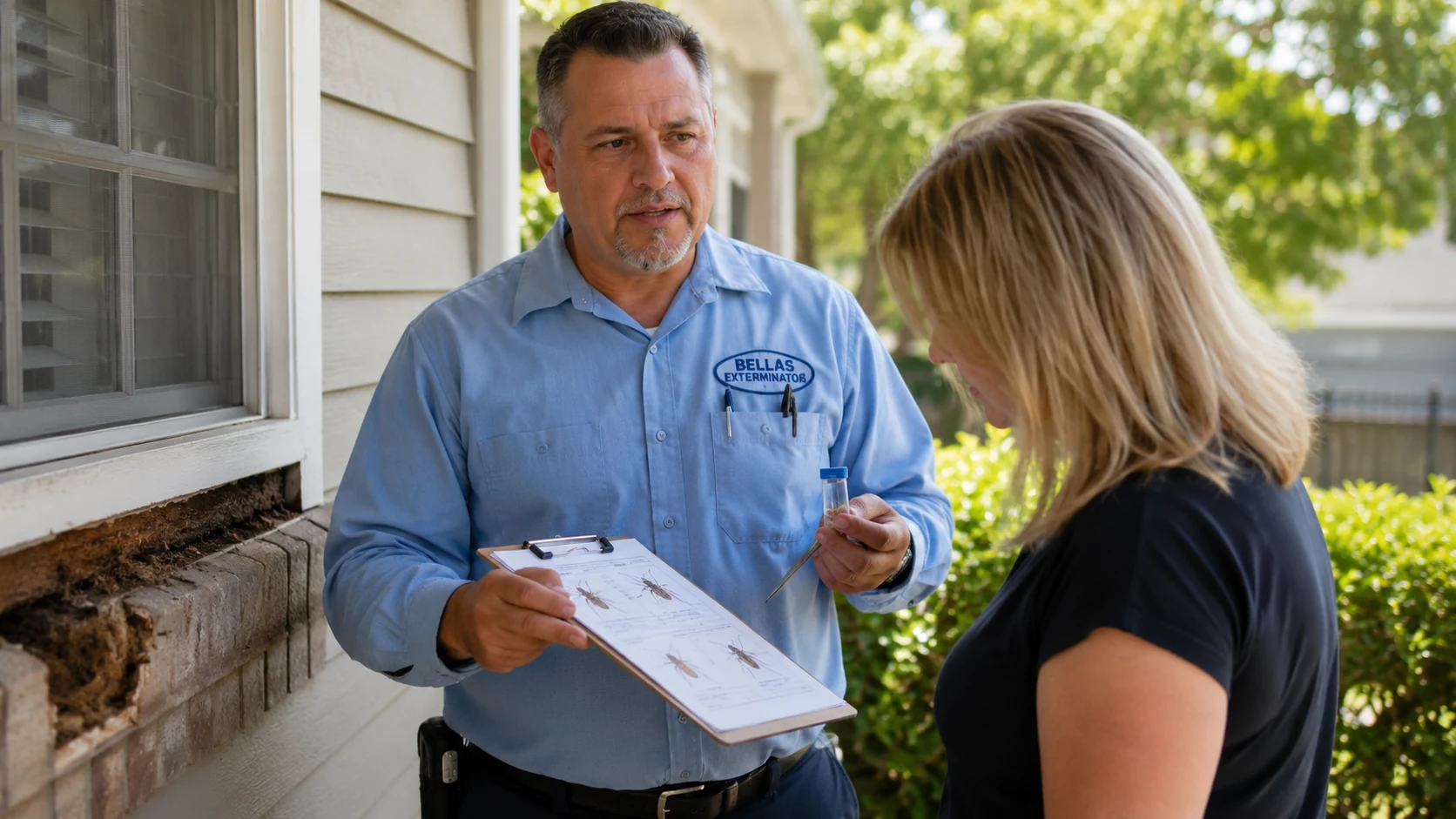
Beetles are another mix-up. Wood-boring and powderpost beetles tunnel through wood and leave small, round exit holes — about the size of a pinhead. Below the holes you may see fine, flour-like powder called frass.
This looks a lot like termite frass, but the texture and the round holes are clues. Drywood termites and beetles are commonly confused, and only a trained eye can be sure. Each pest calls for its own treatment plan.
A few other things fool homeowners. Acrobat ants and other dark winged insects get mistaken for swarmers. Old water damage, dry rot, and even woodpecker holes can look like termite damage at first glance.
The lesson is simple: not every winged bug or hole in the wood means termites. But some do, and guessing wrong is risky.
Each of these pests needs a different treatment. Spraying for ants will not stop termites. Fumigating for termites will not fix a beetle problem. A wrong guess wastes money and lets the real pest keep working.
A professional can identify the pest in minutes and recommend the right fix. You can also browse common local pests in our pest library, or learn about our termite control service if termites are confirmed.
Even when you cannot find the bug, the damage often tells the story. Termites eat along the grain of the wood and leave galleries packed with mud or soil, especially subterranean termites. The wood looks dirty inside and may have a layered, honeycomb look.
Carpenter ants leave clean, smooth tunnels with no mud, plus little piles of sawdust-like shavings nearby. Wood-boring beetles leave round exit holes and fine powder. Knowing these differences helps, but they are easy to mix up. When the damage is hidden inside a wall or beam, a professional with the right tools can read it far more accurately than the eye alone.
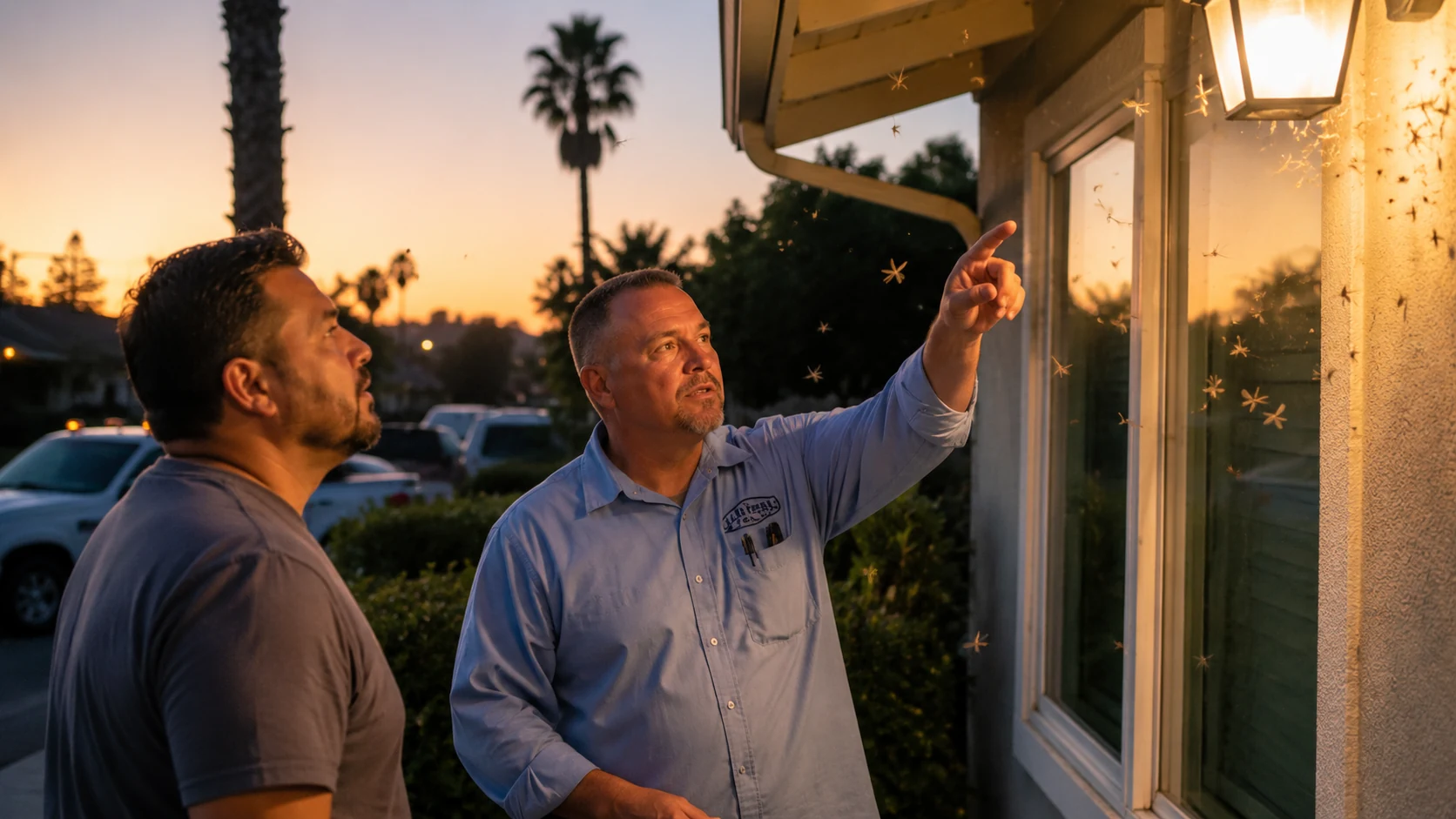
Timing offers another clue. Subterranean termites tend to swarm in spring, often after rain. Drywood termites swarm later, in the warm evenings of late summer and fall. Flying ants can swarm at many times of year, which is why seeing winged insects is never proof on its own.
Glendora's long warm season means swarms can appear across much of the year. If you notice a swarm, the time of year plus the body shape together give the best early hint of what you are dealing with — but a close look seals it.
You can get a good first guess on your own using the body, wings, and antennae as a guide. Catch one of the bugs in a clear bag or jar and compare it side by side with the features we listed. A magnifying glass helps a lot here.
But a first guess is not the same as a diagnosis. The treatments for termites, carpenter ants, and beetles are all different, and a wrong call wastes time and money. If you have any doubt, the safest move is a quick professional ID before anyone treats anything.
Once you have a good idea of what you are dealing with, the right next step depends on the pest. If the signs point to termites, do not wait — termites cause the most expensive damage of the group, and the colony only grows with time. If it looks like carpenter ants or beetles, you still want to act, but the urgency and the treatment will be different. In every case, avoid spraying random products at the problem, since the wrong treatment wastes money and can make the real pest harder to find later.
The smartest move is to confirm the identification with a professional before any treatment begins. A trained technician can verify the pest in minutes, check for hidden activity behind walls, and recommend a plan built for that exact species. This saves you from paying for the wrong fix and from watching the problem return. If you would like to read more about local pests first, our pest library is a helpful starting point, and a free inspection can settle any lingering doubt for good.
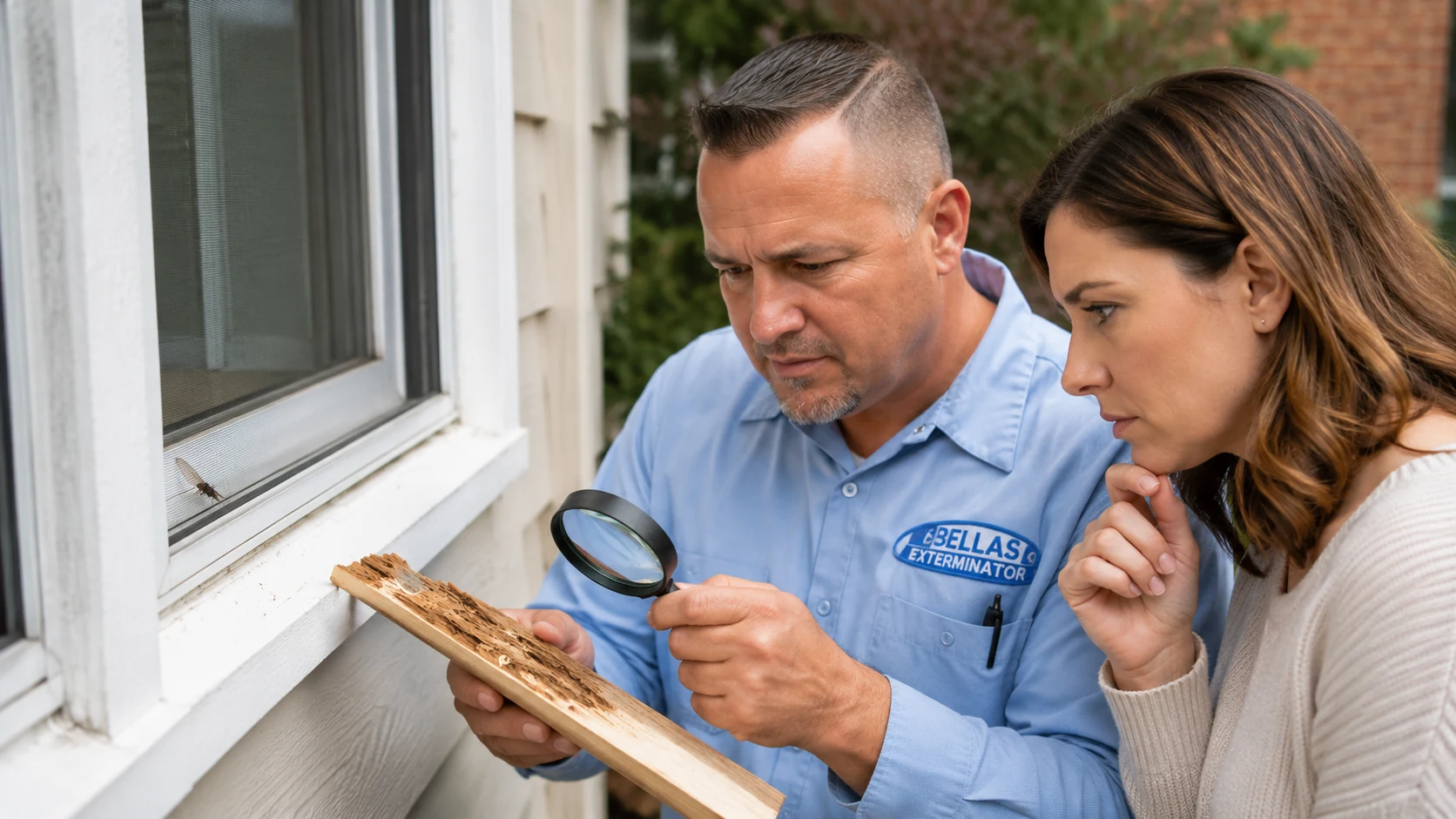
It is easy to feel silly for mixing up these bugs, but there is a good reason so many people do. Termites and flying ants evolved to look similar, and both swarm in warm weather, often near windows and lights. From a few feet away, the small differences in their wings and waists are nearly impossible to see. Add in the fact that most homeowners only encounter these insects once or twice a year, and confusion is almost guaranteed. There is no shame in needing a second look.
The damage they leave is just as tricky. Termite galleries, carpenter ant tunnels, and beetle holes can all look like generic "bug damage" to an untrained eye, especially when it is tucked inside a wall or beam. Old water damage and dry rot only add to the confusion. This is exactly why a professional ID is so valuable: it replaces a worried guess with a clear answer, so you can spend your time and money on the pest you actually have.
When you are staring at a strange bug or a hole in a beam, you do not have to figure it out alone. A quick, free inspection clears up the mystery fast and points you to the right solution.
Getting a confident answer early changes everything. If it turns out to be termites, you can start the right treatment before the colony grows. If it is carpenter ants, beetles, or just old damage, you save yourself the cost and stress of treating a pest you never had. Either way, you replace a nagging worry with a clear plan. That is the real value of a professional identification — not just naming the bug, but giving you the confidence to act correctly the first time, instead of guessing and hoping you guessed right.
Found something you cannot identify?
📞 Call (626) 625-2869
👉 Schedule your free inspection — as the #1 pest & termite control service in Glendora, our local team will identify the pest and recommend the right fix — no guessing.
Authority source: UC IPM – Drywood Termites