
What scents do rodents dislike the most?
Rodents most dislike strong, sharp scents such as peppermint, cinnamon, clove, eucalyptus, vinegar, and ammonia. Because they depend on smell to navigate, these powerful odors can irritate them and make an area feel less safe.
Many homeowners place peppermint oil on cotton balls near entry points to discourage mice and rats. These scents may offer a mild, short-term deterrent, but they do not remove an infestation. Smells fade quickly, and a hungry rodent will cross an unpleasant odor to reach food and shelter.
Scent works best as a small extra step, not a stand-alone fix. True control still depends on sealing entry points, removing food and water, and trapping the rodents already inside.
Popular Deterrents
The scents rodents dislike most
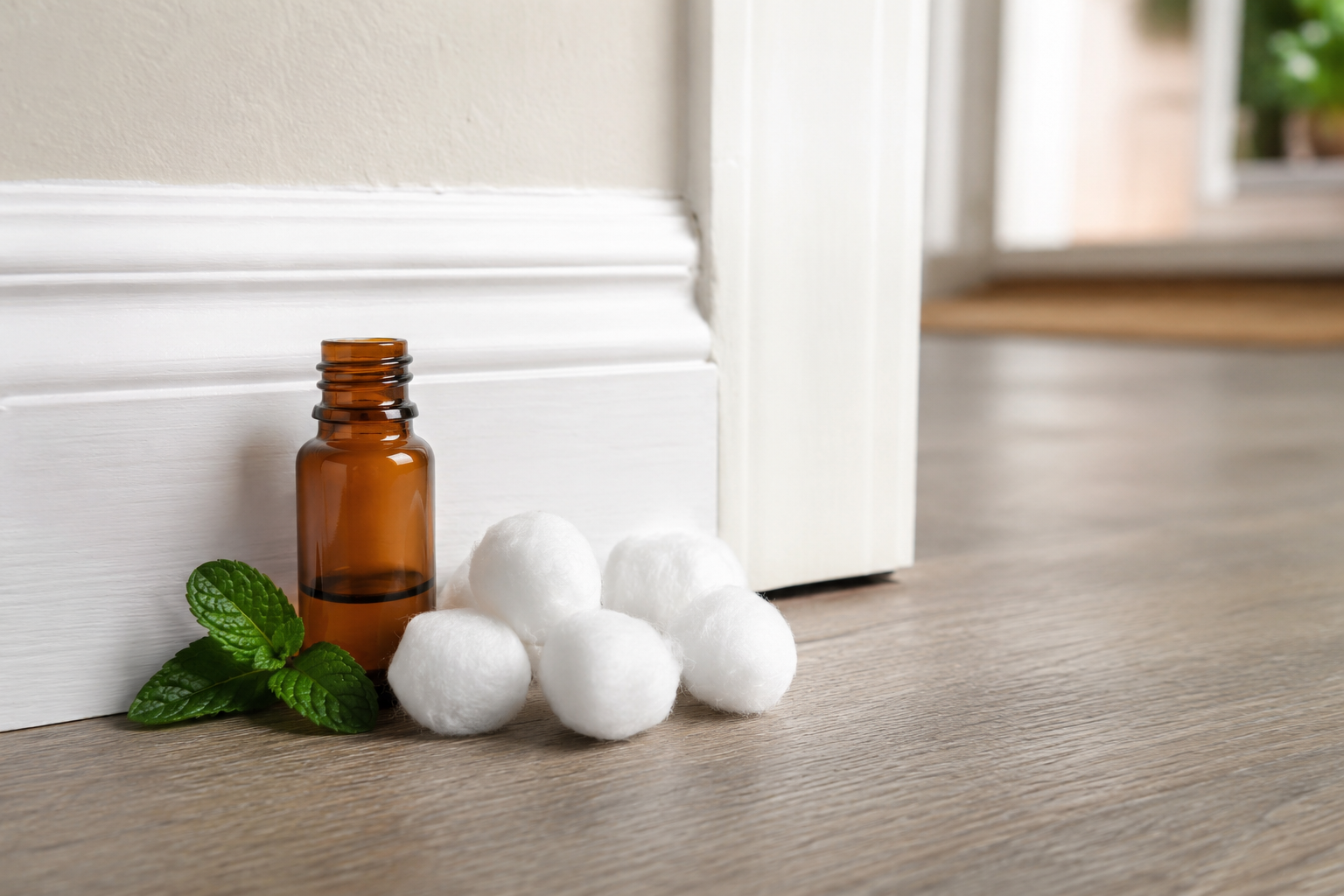
A few strong scents come up again and again as rodent deterrents. Peppermint oil is the most popular, thanks to its sharp, minty smell. Other scents people use include cinnamon, clove, eucalyptus, and the sharp bite of vinegar or ammonia. The idea is that these powerful odors overwhelm a rodent’s sensitive nose and make a space feel unsafe.
Rodents do have an excellent sense of smell, far better than ours, and they use it to map their world. A strong, unfamiliar odor can briefly confuse or annoy them. That is why a freshly soaked cotton ball of peppermint oil might keep a mouse away from one corner for a day or two. The effect, however, is mild and short-lived at best.
It helps to understand why these particular smells bother rodents. A mouse relies on scent to find food, recognize family, and sense danger, so a flood of strong odor can briefly overwhelm those signals. Essential oils like peppermint are concentrated, which is why they seem to work at first. Mothballs are sometimes suggested too, but they are made for fabric pests and can be unsafe to scatter around a home.
You may also see homemade sprays that mix these oils with water or vinegar. They can freshen a room and might briefly discourage a curious rodent, but the same limits apply. The active scent breaks down, surfaces dry out, and the rodent’s drive for food wins out.
- ✓Peppermint oil
The most common home remedy, often placed on cotton balls near baseboards or entry points.
- ✓Cinnamon, clove, and eucalyptus
Sharp, concentrated scents that may briefly make an area less comfortable for rodents.
- ✓Vinegar and ammonia
Strong odors that can irritate rodents, but fade quickly and do not remove the infestation.
The Honest Truth
Do these scents actually keep rodents away?
Here is the honest truth: scents alone will not solve a rodent problem. Studies and field experience both show that home remedies like peppermint oil offer only a weak, temporary effect. A rodent that is hungry, thirsty, or looking for warmth will walk right past an unpleasant smell to get what it needs. Survival beats discomfort every time.
The pest experts at the University of California focus their house mouse guidance on sealing, sanitation, and trapping rather than repellent smells, because those are the methods proven to work. Scents may make you feel like you are doing something, but they rarely change the outcome. If you rely on smell alone, the infestation usually continues to grow quietly behind the scenes.
Real-world conditions make scents even less reliable than lab tests suggest. Air moves constantly through a home, diluting odors and carrying them away from the spots you want protected. A cotton ball loses its punch within days, and rodents quickly learn that the smell brings no actual harm. Meanwhile, the infestation continues to grow out of sight.
Bellas tip: Scent can be a finishing touch after the real work is done. It should never replace sealing, sanitation, trapping, or a professional inspection when there is active rodent activity.
Why Home Remedies Fail
Why smell-based repellents fall short
There are simple reasons scents disappoint. First, odors fade fast, so you would have to refresh them constantly to keep any effect. Second, rodents get used to smells over time and learn that no real danger follows. Third, a scent in one spot just pushes a rodent to another part of your home, rather than removing it.
Most importantly, scents do nothing about the real cause of an infestation: open entry points and easy food. As long as rodents can get in and find a meal, they will keep coming, no matter how minty your cabinets smell. Treating the smell instead of the source is like covering a leak with a towel rather than fixing the pipe.
There is also a comfort trap worth naming. Scent remedies feel productive because you can smell them working, which makes it easy to believe the problem is handled. That false sense of progress is risky. While you focus on refreshing peppermint oil, rodents keep breeding and chewing behind the walls. By the time the truth becomes obvious, the infestation is larger and harder to clear.
What Actually Works
What works far better than scent
The methods that actually control rodents are not glamorous, but they work. Sealing entry points keeps new rodents out. Removing food and water makes your home a poor target. Trapping clears the rodents already inside. Together, these steps break the cycle in a way no scent ever could. They address why rodents are there in the first place.
If you enjoy using scents, treat them as a minor extra layer rather than your main defense. Place them alongside good sealing and sanitation, not in place of it. That way you get whatever small benefit they offer without relying on them to do a job they cannot finish on their own.
If you love a fresh-smelling home, there is no harm in using these scents as a pleasant extra, as long as you do not rely on them. Keep the real work front and center: seal the gaps, remove the food, and trap what is inside. Those steps address the cause, while scent only masks a symptom.
Local Rodent Help
Get lasting results with local help
When rodents have settled in, home remedies usually fall short, and the problem keeps growing. That is the point to bring in a professional who can inspect, seal, and treat the whole home. A trained eye finds the hidden gaps and nests that scents and store-bought gadgets miss entirely.
As a family-owned, owner-operated company with more than 20 years serving Glendora and the San Gabriel Valley, Bellas Exterminator knows what truly keeps rodents out. We skip the gimmicks and use proven, low-toxicity methods built for local homes. Contact us for a free inspection and get results that last longer than a scent.
Every home is a little different, which is why a one-size-fits-all remedy rarely works. The layout of your house, the landscaping around it, and the type of rodent involved all change the right approach. A professional inspection reads those details and builds a plan to match, finding the specific gaps and nests that store-bought solutions overlook.
We also take time to explain what we find, so you understand why each step is part of the plan. That way you are not left guessing or buying random products that do not help. Clear answers and a tailored approach beat a cabinet full of half-used remedies every time.
Our Services
A Solution For Any Kind Of Pest Needs
Rodent Control
Inspection, active removal, and practical prevention that targets the source of mouse and rat activity.
Exclusion Guidance
Support finding entry points around foundations, vents, pipes, garage doors, roofs, and utility lines.
Residential Pest Control
Family-friendly pest control support for kitchens, garages, attics, crawl spaces, and living areas.
Enjoy A Pest Free Environment!
Ready for rodent control that works better than scent?
If peppermint oil and home remedies are not stopping rodent activity, contact Bellas Exterminator for a free inspection. Our local Glendora team can find the source, seal hidden entry points, and help you get lasting results.