
When is rat season at its worst?
Rat season is usually at its worst in the fall and early winter, when dropping temperatures push rats indoors to seek warmth, food, and a safe place to nest. As the weather cools, rats move from yards and open spaces into attics, garages, and walls.
In foothill areas like Glendora, roof rats also surge in late summer as dry canyons drive them toward homes and gardens with food and water. Rats remain active all year, but these seasonal shifts are when most homeowners first notice them.
The best defense is to seal and rodent-proof your home before fall, so rats cannot settle in when the peak arrives.
Peak Indoor Pressure
Fall and winter: the indoor rush
The biggest spike in rat problems comes as the weather turns cold. When nights get chilly in the fall, rats start looking for warm, sheltered places to ride out the winter. Your heated home, with its food and hidden spaces, is exactly what they want. Attics, wall voids, garages, and crawl spaces all become prime real estate.
This is why so many homeowners first hear scratching overhead in autumn. The rats are not new to the area—they are simply moving indoors as outdoor conditions worsen. Once inside, they nest and breed in the warmth, which is how a quiet fall can turn into a noisy, crowded winter if the entry points are not sealed in time.
Rain plays a role in this seasonal push as well. When the first storms of late fall and winter soak the ground, rats that were nesting in yards, woodpiles, and burrows look for drier shelter, and your home is the obvious choice. A warm attic during a cold, wet week is a powerful draw.
Preparing your home before the rains arrive, rather than during them, gives you a real edge over the seasonal surge.
- 1Cold nights push rats indoors
Warm attics, garages, and wall voids become attractive shelters.
- 2Rain drives rats to drier spaces
Storms can move rats out of outdoor nests and closer to your home.
- 3Unsealed gaps become open doors
Small roofline, vent, pipe, and garage gaps let rats settle in fast.
Glendora Foothill Pattern
Late summer in the foothills
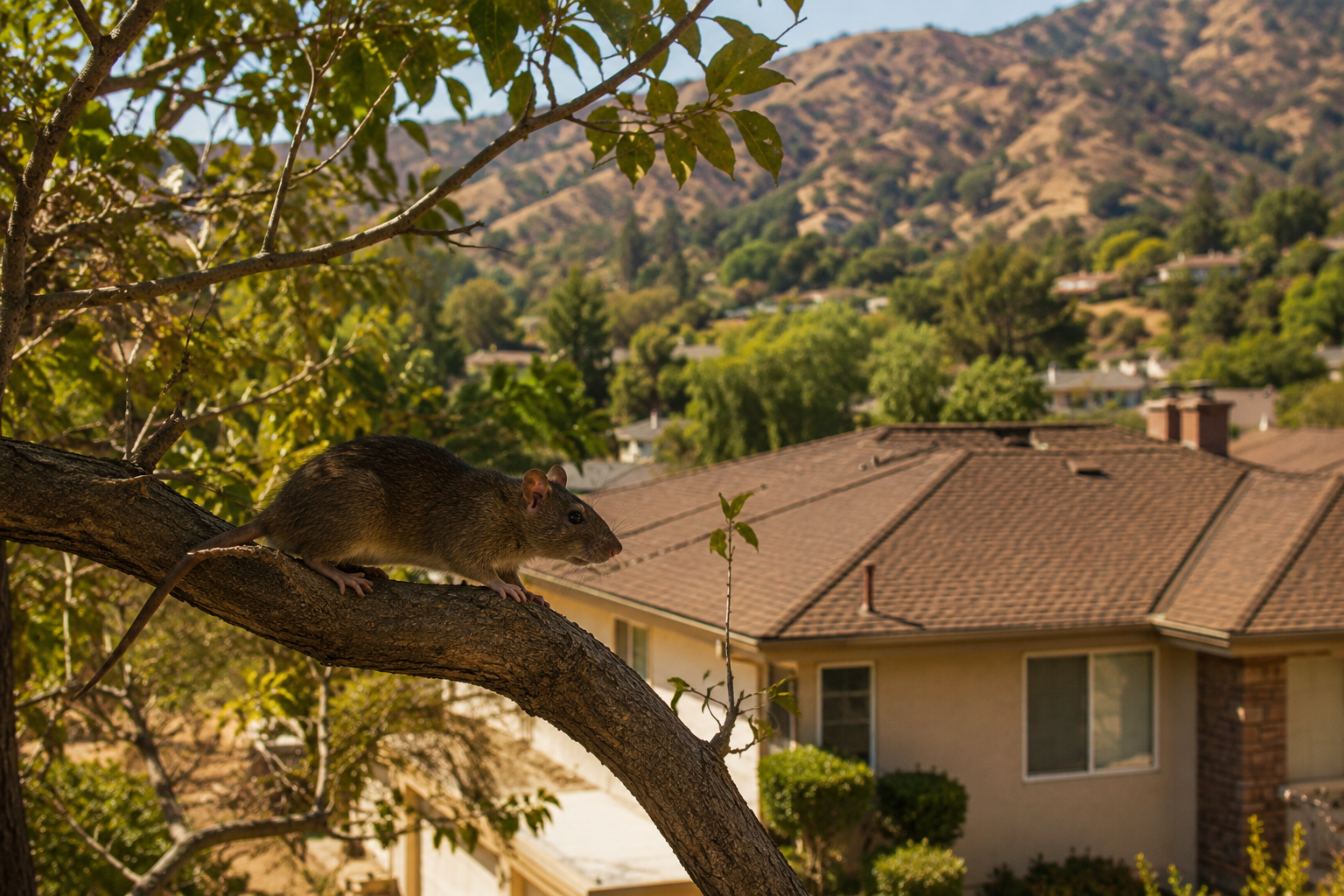
Glendora’s spot at the base of the San Gabriel Mountains creates a second seasonal challenge. Roof rats are common here, and they thrive in canyon vegetation through the spring. As late summer dries out the hillsides, food and water in the canyons grow scarce, and the rats move downhill toward neighborhoods with gardens, fruit trees, and irrigation.
We see this pattern every year in our local service area. Homes near open space and canyon edges often notice roof rats first, arriving in late summer well before the fall cold sets in. If you live along the foothills, watch for early signs as summer ends, because your peak season may start sooner than it does in flatter parts of the valley.
Watering habits in the dry months can unintentionally invite roof rats closer. As the canyons turn brown, a green, irrigated yard with fruit trees and dripping hose bibs becomes an oasis. Rats follow the water and food right to your doorstep.
Simple changes help: fix leaking irrigation, harvest ripe fruit promptly, and avoid leaving standing water in the yard overnight. By making your landscape less of a refuge during the late-summer dry spell, you reduce the number of rats that ever reach your home in the first place.
Bellas tip: If your home sits near foothills, open space, or canyon edges, start rat-proofing in late summer—not after the first cold night.
Year-Round Activity
Why rats are active year-round here
Southern California’s mild climate means rats never fully disappear. Unlike colder regions where winter slows pests dramatically, our gentle weather lets rats stay active in every season. The University of California notes that rats breed and forage throughout the year when food and shelter are available, which describes much of our region.
That means the worst season is really about when pressure peaks, not when rats appear from nowhere. They are always nearby. Fall and late summer simply concentrate their movement toward your home. Because they are a year-round presence, the smartest strategy is steady, ongoing prevention rather than waiting for a single season to react.
This year-round reality changes how you should think about timing. Rather than treating rat control as a one-time fall project, the most effective homeowners keep up light, steady prevention all year. A sealed home, a tidy yard, and trimmed trees protect you no matter the season.
Because rats never truly leave, even a quiet stretch is a good time to prepare. Use the slower months to seal gaps, trim branches, and organize storage areas while pressure is low and the work is easier.
Early Warning Signs
Signs the season has arrived
Catching the seasonal shift early saves a lot of trouble. Listen for scratching or scurrying in the attic and walls, especially at night. Look for fresh droppings in the garage, along walls, and near food storage. Gnaw marks on wires, wood, or packaging are another clear clue, as are greasy smudge marks along the paths rats travel.
Outdoors, watch for rats running along fence tops or tree branches at dusk, a classic roof rat habit. Chewed fruit or vegetables in the garden also signal rising activity. The moment you notice these signs as summer fades or fall begins, treat it as the start of your peak season and act before the population grows.
Damage often tells the seasonal story before you ever see a rat. As activity rises, you may notice chewed wiring, gnawed plastic, or shredded insulation in the attic. Rats also leave dark, greasy rub marks along the beams and pipes they travel, and you might find small burrow openings near the foundation or under dense plants.
Comparing what you see week to week is useful as the season turns. Fresh droppings appearing where you cleaned, new gnaw marks, or louder nighttime noise all signal a population on the rise. Catching that upward trend early lets you respond while the numbers are still small and manageable.
Prevention Before Peak
Get ahead of peak season
The best time to rat-proof your home is before the season hits, not during it. In late summer, seal entry points around the roofline, vents, and pipes, and trim tree branches that give roof rats a path to your roof. Clear brush, fallen fruit, and clutter from the yard to remove shelter and food. These steps make your home far less inviting when the rush begins.
A professional inspection before fall can find and seal the gaps you might miss, giving you a head start on the season. As a family-owned, owner-operated company with deep roots in Glendora and the San Gabriel Valley, Bellas Exterminator helps homeowners prepare early every year. Contact us to rodent-proof your home before peak rat season arrives.
Timing your defense is the whole game with rats. A home sealed and trimmed in late summer simply does not offer the easy entry that an unprepared home does when the cold and rain push rats indoors. Our team builds that head start for local families every year, focusing on the foothill patterns we know so well.
Preparing early also tends to cost less than reacting late. Sealing a few gaps before the season is simpler than removing a settled colony from the attic afterward.
Our Services
A Solution For Any Kind Of Pest Needs
Rat Control
Seasonal inspections, trapping, monitoring, and prevention for active rat problems.
Rodent Exclusion
Sealing roofline, vent, utility, garage, foundation, and crawl space entry points.
Residential Pest Control
Local pest control support for homes throughout Glendora and the San Gabriel Valley.
Enjoy A Pest Free Environment!
Rodent-proof your home before rat season peaks.
Bellas Exterminator helps Glendora families prepare before seasonal rat pressure moves indoors. Let our local team inspect your home, identify vulnerable entry points, and build a prevention plan before the scratching starts.