Inspect the structure
We check foundations, wood trim, baseboards, window sills, crawl spaces, garages, attics, and areas with moisture or wood-to-soil contact.

Termite Control in Glendora, CA
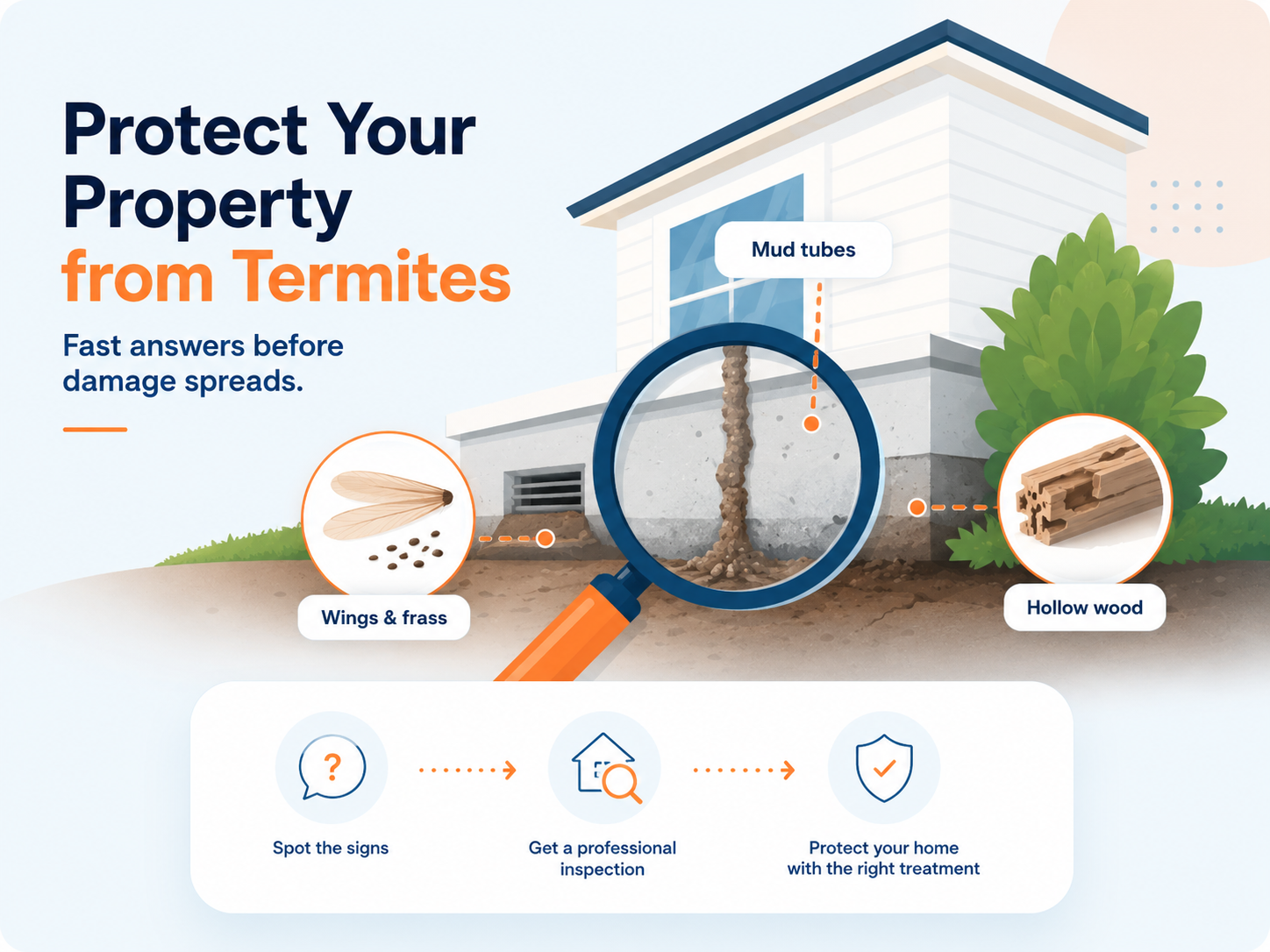
Termites can damage wood quietly before obvious signs appear. Bellas Exterminator helps Glendora homeowners and businesses identify termite activity, understand the right treatment options, and protect the structure before the damage spreads.
Complete Termite Control
Different termites need different solutions. A stronger service page should explain the inspection, termite type, treatment options, and prevention plan so the visitor understands why professional help matters.
We check foundations, wood trim, baseboards, window sills, crawl spaces, garages, attics, and areas with moisture or wood-to-soil contact.
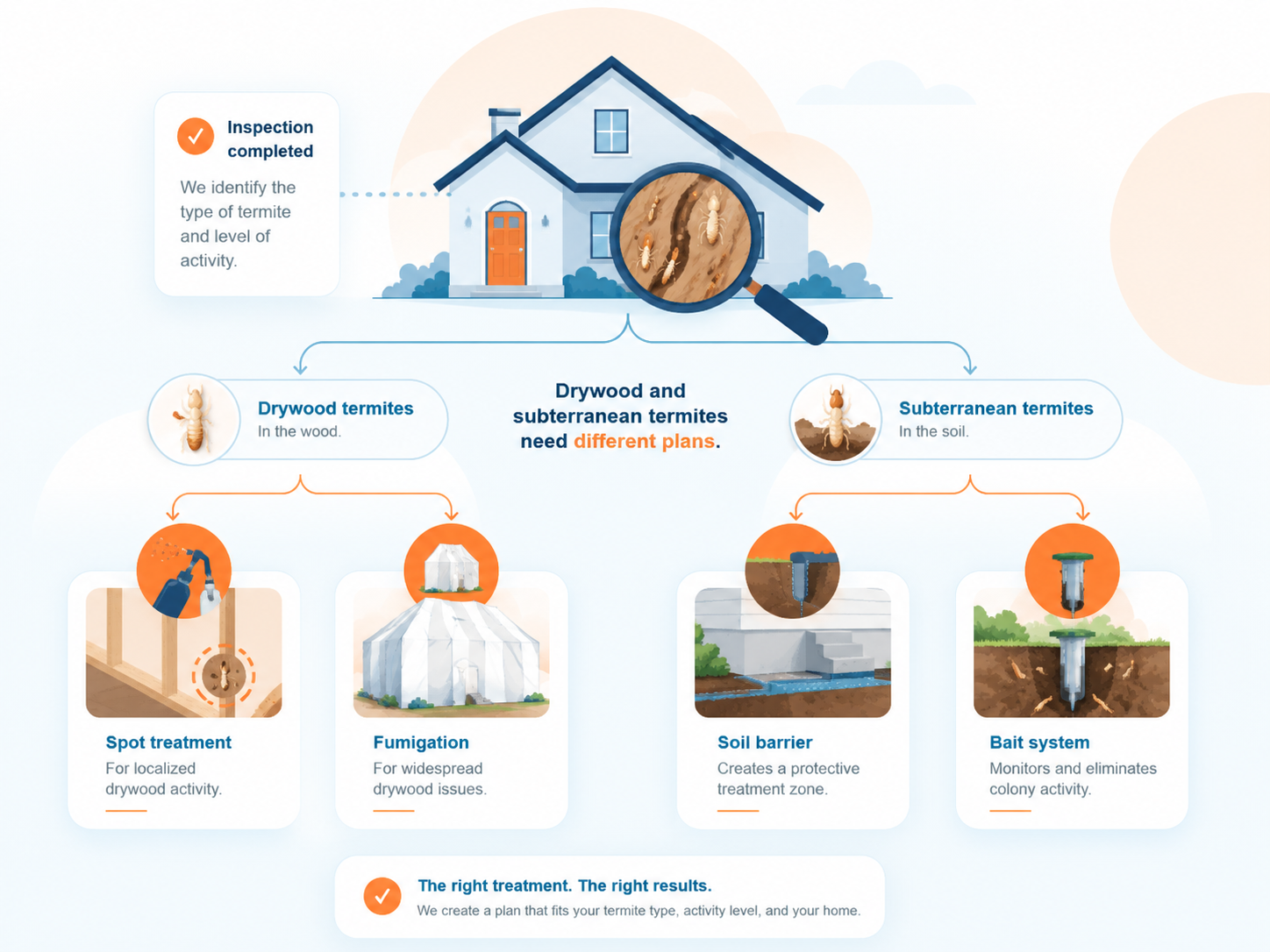
Drywood and subterranean termites behave differently. Correct identification helps determine the right treatment path.
Once activity is confirmed, we recommend the most appropriate treatment and prevention strategy to stop the colony and reduce future risk.
Warning Signs
Termites are easy to miss because much of their damage happens behind surfaces. These are the signs homeowners should not ignore.
Inspection First
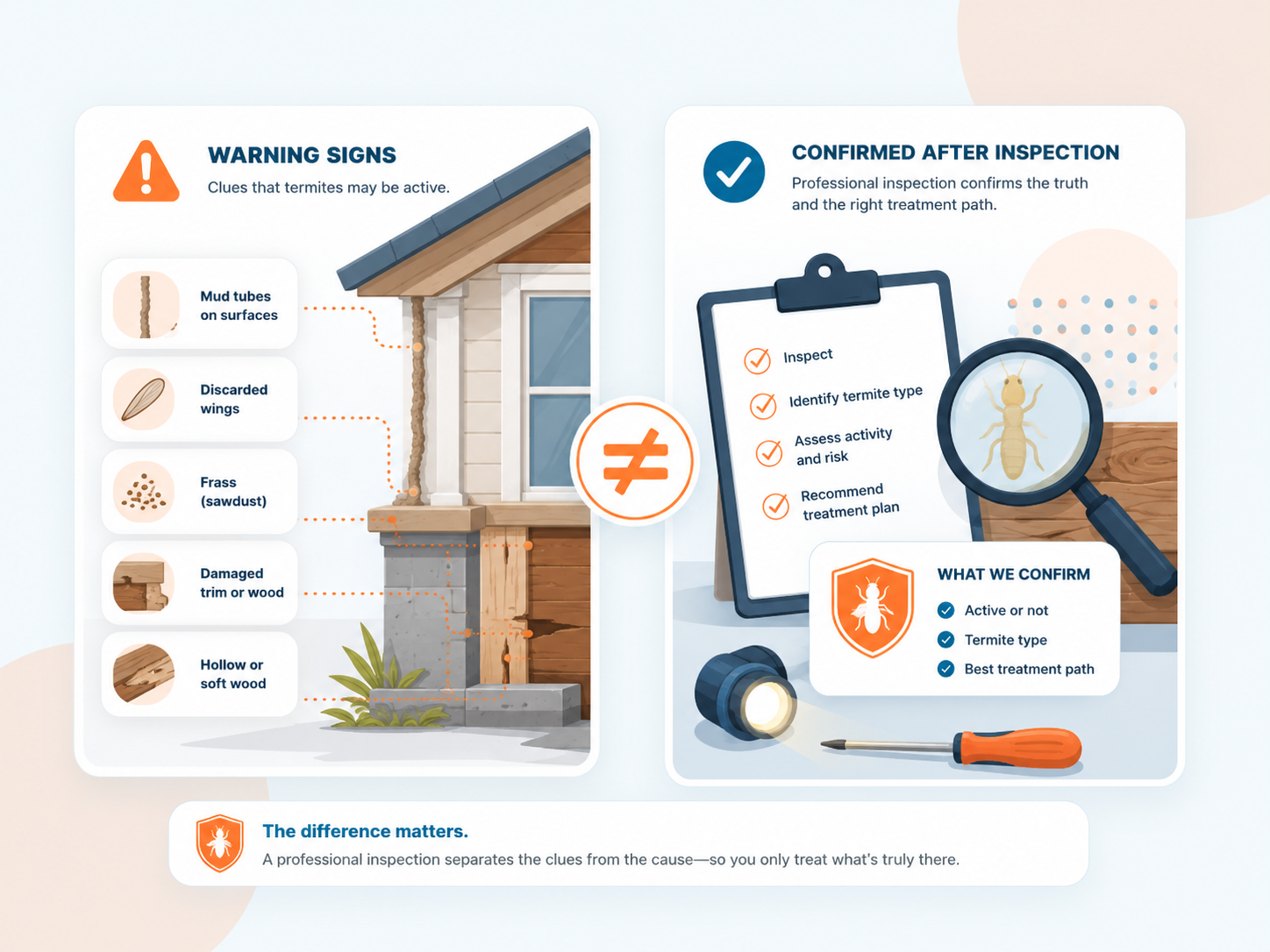
Mud tubes, wings, frass, hollow wood, and damaged trim are all warning signs. But homeowners often confuse termites with flying ants, carpenter ants, or wood-boring beetles. That matters because each pest needs a different treatment.
A professional termite inspection helps confirm what is active, what type of termite is involved, where the risk is highest, and what treatment will actually reach the colony.
Our Process
A strong termite page should make the process simple: inspect, identify, treat, prevent, and monitor.
We check the structure for termite signs, damage patterns, moisture concerns, and areas where termites are likely to enter or nest.
We determine whether the signs point to drywood termites, subterranean termites, or another wood-damaging pest.
We explain what we found and recommend the most appropriate treatment based on termite type and infestation scope.
Depending on the situation, treatment may involve targeted applications, liquid soil treatment, baiting systems, fumigation, or a combination.
We help reduce future risk by addressing moisture, wood-to-soil contact, landscaping conditions, and inspection timing.
Treatment Options
Drywood termites live inside the wood they infest and may require targeted spot treatments or fumigation when activity is widespread. Subterranean termites usually come from the soil and often require a soil-focused strategy, such as liquid barriers or bait systems.
The right approach depends on where activity is found, how far it has spread, and what kind of termites are present. That is why inspection is the first step.
Service Options
Termites can threaten residential properties, commercial buildings, rental units, and real estate transactions. The service page should make that scope clear.
For homeowners dealing with termite signs, damaged wood, swarming insects, real estate inspection concerns, or recurring termite activity.
For local businesses that need accurate identification, professional treatment recommendations, and prevention guidance.
Prevention
Termite control is not only about treating active colonies. It also means reducing the conditions that make a home attractive to termites in the first place.
After inspection, Bellas Exterminator can point out moisture, drainage, wood storage, mulch, landscaping, and structural conditions that may increase termite risk.
Where We Help
Bellas Exterminator serves Glendora and nearby San Gabriel Valley communities with local termite inspections, treatment recommendations, and pest prevention support.
Whether you are seeing mud tubes, discarded wings, damaged wood, or you simply want peace of mind before the season gets busy, our local team helps protect homes and businesses throughout Glendora and nearby communities.
Termite Control FAQ
These FAQs link to their supporting termite articles and include a free inspection path for visitors who are ready to act.
You can do a quick termite check yourself in a few minutes. Tap wooden beams, door frames, and baseboards — if the wood sounds hollow or feels soft, termites may be inside. Look along your foundation for mud tubes, thin tunnels of dried mud about as wide as a pencil. Check window sills for tiny discarded wings, and look for small piles that resemble sawdust or pepper near wood. In Glendora, homes near the foothills should be checked a few times a year. A self-check is a good start, but only a pro can confirm it. We offer free termite inspections across LA County.
The fastest way to kill termites depends on the type you have. For drywood termites, professional fumigation or targeted spot treatments work quickly. For subterranean termites, liquid soil barriers and bait systems stop them at the source. Store-bought sprays may kill the few termites you can see, but they rarely reach the colony — and the colony is the real problem. A licensed technician finds the nest and treats it the right way, so the termites do not return. In Glendora, our team treats both termite types every week and knows which method works fastest for your home.
A termite's biggest enemy is a trained pest control pro — but nature has a few too. Ants are a termite's top natural predator and often raid colonies for food. Tiny worms called nematodes, certain fungi, and even some birds also feed on termites. Still, these natural enemies rarely wipe out a full colony hidden inside your walls. That is why professional treatment is the most reliable way to protect your home. Our Glendora team uses proven methods that target the colony directly, not just the termites you can see.
Termites are not directly harmful to humans. They do not bite, sting, or spread disease the way some other pests do. But they can still hurt you another way — by damaging your home. Termites eat wood from the inside out, which can weaken floors, walls, and support beams over time. This damage is costly to fix and can even make a home unsafe. People with allergies or asthma may also react to termite droppings or dust. So while termites will not harm your body, they can do real harm to your house.
Several bugs get mistaken for termites — the most common is the flying ant. Both swarm at the same time of year, but you can tell them apart. Termites have straight antennae, two pairs of equal-sized wings, and a thick waist. Ants have bent antennae, uneven wings, and a pinched waist. People also confuse termite damage with damage from carpenter ants or wood-boring beetles. Telling them apart matters, because each pest needs a different treatment. If you are not sure what you are dealing with, a quick inspection clears it up fast. Our Glendora team can identify the pest and recommend the right fix.
The earliest warning signs of termites are easy to miss. Watch for mud tubes running up your foundation, and for discarded wings near windows or doors after a swarm. Wood that sounds hollow when tapped, or paint that looks bubbled or cracked, often hides damage underneath. You may also spot frass — small pellets that look like coffee grounds — beneath wooden surfaces. Doors and windows that suddenly stick can be another clue. The sooner you catch these signs, the less damage termites can do. In Glendora's mild climate, termites stay active, so early action matters.
Termites are active all year, but they swarm most in spring and early summer. Warm, humid days after rain are prime swarming time, when young termites leave the nest to start new colonies. In Southern California, subterranean termites often swarm in spring, while drywood termites swarm in late summer and fall. Because Glendora's weather stays mild, termites can stay busy almost year-round — they do not slow down in winter like they do in colder states. That is why regular inspections matter, no matter the season.
Enjoy A Pest Free Environment!
Bellas Exterminator provides termite inspections and termite control guidance in Glendora and nearby communities. Let our local team inspect the property, identify the termite type, and recommend the right treatment path.